
Structure and motion rebuilds
When a gantry starts running out of square, cut quality drops long before the table stops moving. We rebuild the structure and motion side of existing plasma tables so the machine tracks straight, holds height properly and stops fighting the operator.
Gantry structure rebuilds for worn tables
Some tables arrive at the point where fresh controls alone will not cure poor parts. Worn rails, damaged rack sections, stretched belts, loose pinions and a beam that no longer squares properly will show up as tapered holes, rough corners, uneven edge quality and torch crashes near one side of the bed.
We strip back the motion system, inspect the running surfaces, correct alignment, replace worn drive items where needed and tune the table so both sides travel together. If the frame is sound, a proper motion rebuild often gives an older table several more useful years.
- Rail inspection for wear, pitting, misalignment and mounting issues
- Rack and pinion checks for pitch damage, backlash and tooth wear
- Belt and pulley assessment on machines using belt drive stages
- Gantry squaring, end-stop setting and travel synchronisation
- Carriage wheel, bearing and slide checks on X, Y and Z motion
- Cable chain routing and drag resistance review where motion is affected
What is included in the rebuild scope
Each job starts with the actual fault pattern on the table in front of us. On some machines the core issue is one rail sitting high and forcing the beam to twist. On others it is a mix of backlash, worn reduction parts and brackets that have worked loose over time. The rebuild scope is set to suit the machine and the faults found on site.
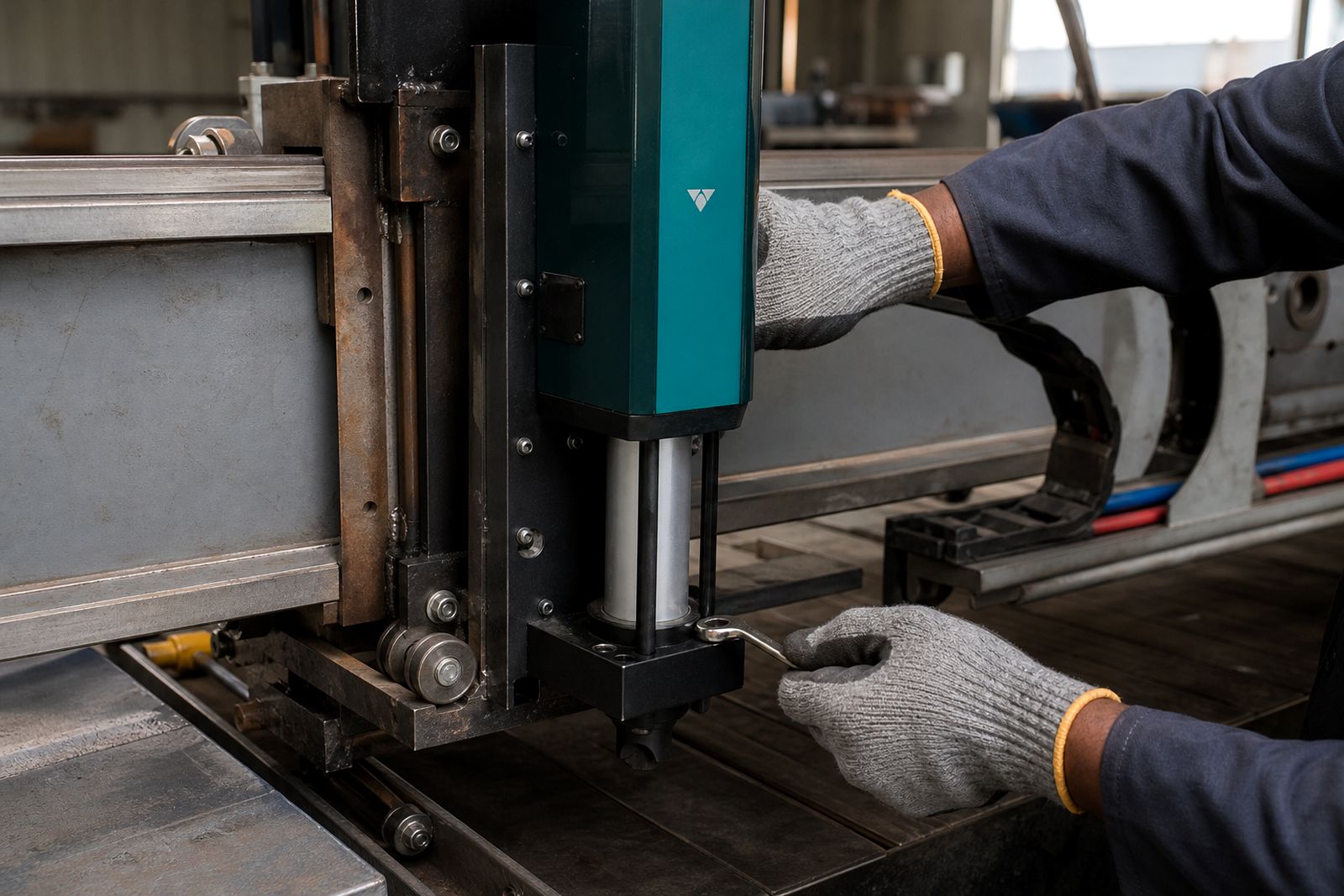
Work can include removal and replacement of rails, rack sections, drive belts, pinions, reduction assemblies, wheel sets, linear guides, limit hardware and gantry mounting components. We also reset straightness, parallelism and cross-measurements across the full working travel. If the table also needs a controller swap or torch-height upgrade, that work can be combined under the same site visit so the mechanical and control alignment is done together.
- Mechanical strip and assessment of the gantry drive path
- Replacement of motion consumables and worn transmission items
- Rail shimming or remounting to restore straight travel
- Squaring of gantry ends to reduce racking across the beam
- Axis tuning after rebuild so acceleration matches real mechanical condition
- Cut path test pieces to confirm cleaner motion under load
How the job runs on site
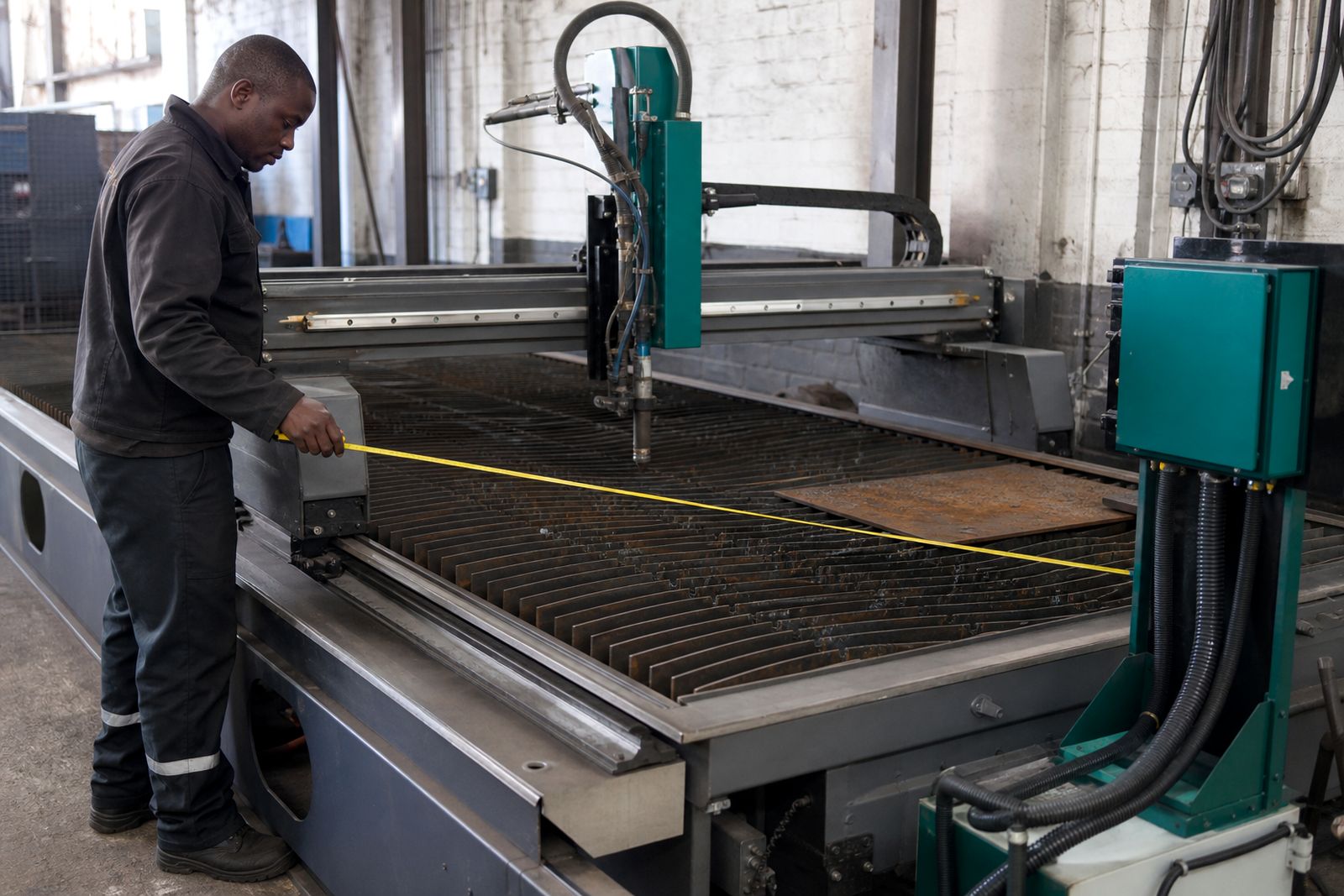
We begin with a measured inspection of the table in its working position. That includes diagonal checks, rail level comparison, carriage movement by hand, backlash reading where accessible and a look at the slat bed, supports and cable runs to see whether debris or distortion is contributing to the fault. From there we confirm which parts can stay in service and which ones are no longer worth tuning around.
Once the scope is agreed, the machine is stripped far enough to reach the worn areas without creating unnecessary downtime. Rails and racks are set from reference points. The gantry is squared to the travel line, and both sides are synchronised before final tuning. Only after the machine moves freely and repeats properly do we set motion values in the control. A table with heavy wear will often show better cut behaviour at stable production speeds that suit the real mechanical condition, so tuning is done for stable production.
Before handover we run dry travel tests, datum checks and sample cuts. If extraction changes or torch-height tuning are part of the same visit, those are completed after the motion side is stable.
What your workshop should prepare
A rebuild goes smoother when the table is accessible and the surrounding area is cleared properly. We need room to strip guards, remove gantry covers and run measuring equipment along both sides of the machine. On coastal sites around Gqeberha and East London, it also helps to wipe away settled dust and damp residue before we open cabinets and drive housings.
- Clear access along both rails for the full table length
- Safe isolation point for the machine and extraction equipment
- Forklift or lifting help if heavy beam sections must be moved
- Basic history of the fault, including where poor cuts usually appear
- Sample parts or drawings that show the real production problem
- Confirmation of available mains supply for testing after reassembly
If the machine has recurring crashes, send a few photos and a short note through our contact form before the visit. That helps us arrive with the likely hardware and avoids wasting site time on obvious missing pieces.
How pricing is worked out
Pricing depends on table size, travel length, access to the motion components and how much of the existing hardware can still be kept. A short workshop table with localised rack wear is a very different job from a wide plate machine with two damaged rails and a twisted gantry. For that reason we price structure and motion rebuilds from the inspected scope rather than from a flat menu.
The main cost drivers are usually replacement mechanical parts, labour to strip and re-align the gantry, travel for out-of-town sites and any related control work needed after the rebuild. If the machine has hidden wear in reduction stages or axis carriages, we note that before extra work is added. We rebuild existing tables where the base machine remains worth saving, and the quotation stays focused on that work.
Where sensible, we can split a project into stages such as rail correction first and control tuning after production has stabilised. That is often useful for workshops that cannot stop the machine for one long block.
Aftercare and practical operating notes
Once the rebuild is finished, the table should be kept in shape so it does not drift back into the same wear pattern. We show the operator where to watch for fresh backlash, uneven pinion contact, belt dust, torch cable drag and signs that one side is starting to carry more load than the other. Small corrections done early are cheaper than another full strip.
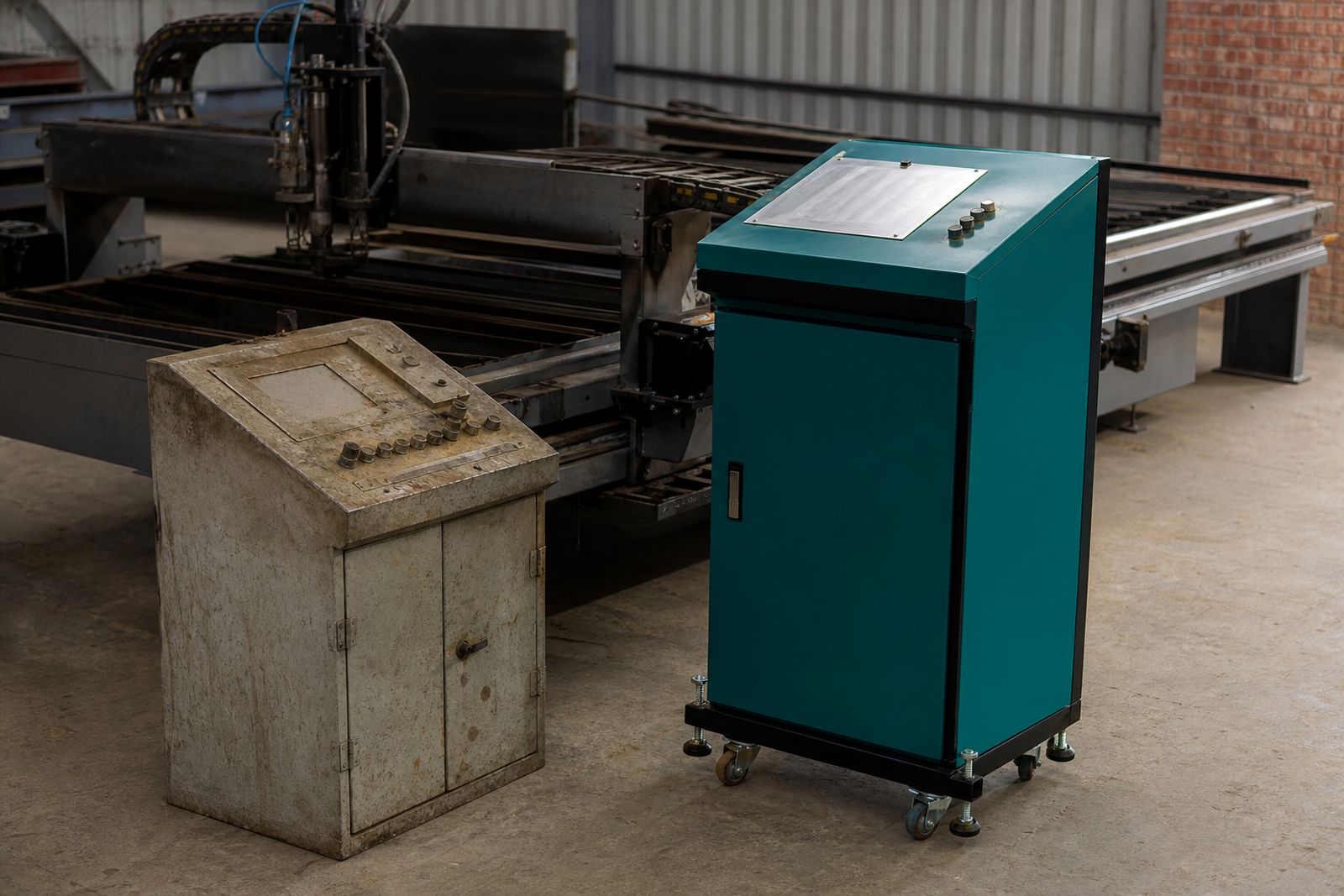
Aftercare can include follow-up tuning, replacement spares for wear items and related upgrades such as torch-height control, extraction changes or a controller retrofit if the mechanics are now ready for it. In humid coastal shops, regular cleaning of rails and rack teeth matters more than many operators realise, because fine abrasive dust mixed with salt air forms a paste that shortens bearing and gear life a fair bit.
For tables in Gqeberha, Kariega, Makhanda and East London we handle inspection and rebuild work directly, with retrofit crews also travelling to the Western Cape, Free State and Gauteng when the machine justifies the trip.
What our Plasma Retrofit customers say
Verified Google reviews
Questions we get asked
Can you rebuild a table even if the controls are still old?
We can correct the mechanical side first if that is where the fault sits. If the controller or height control also needs attention, we can scope that as part of the same project or as a later stage.
Do you replace the whole bed structure?
We rebuild gantry structure and motion systems on existing tables where the base table remains worth saving. We rebuild rails, drive parts and gantry alignment, and we do not sell new complete machines or replacement beds.
How do I know whether my table is worth this work?
The answer depends on frame condition, available parts, cut demand and how far the wear has spread. If you send photos, table size and a short fault description through our contact form, we can advise whether an inspection is the sensible next step.
Also worth a look
Tell us about the job
Send sizes, materials and where you are through our contact form, and we will come back with the practical options.
Open the contact form