
Fume extraction for existing tables
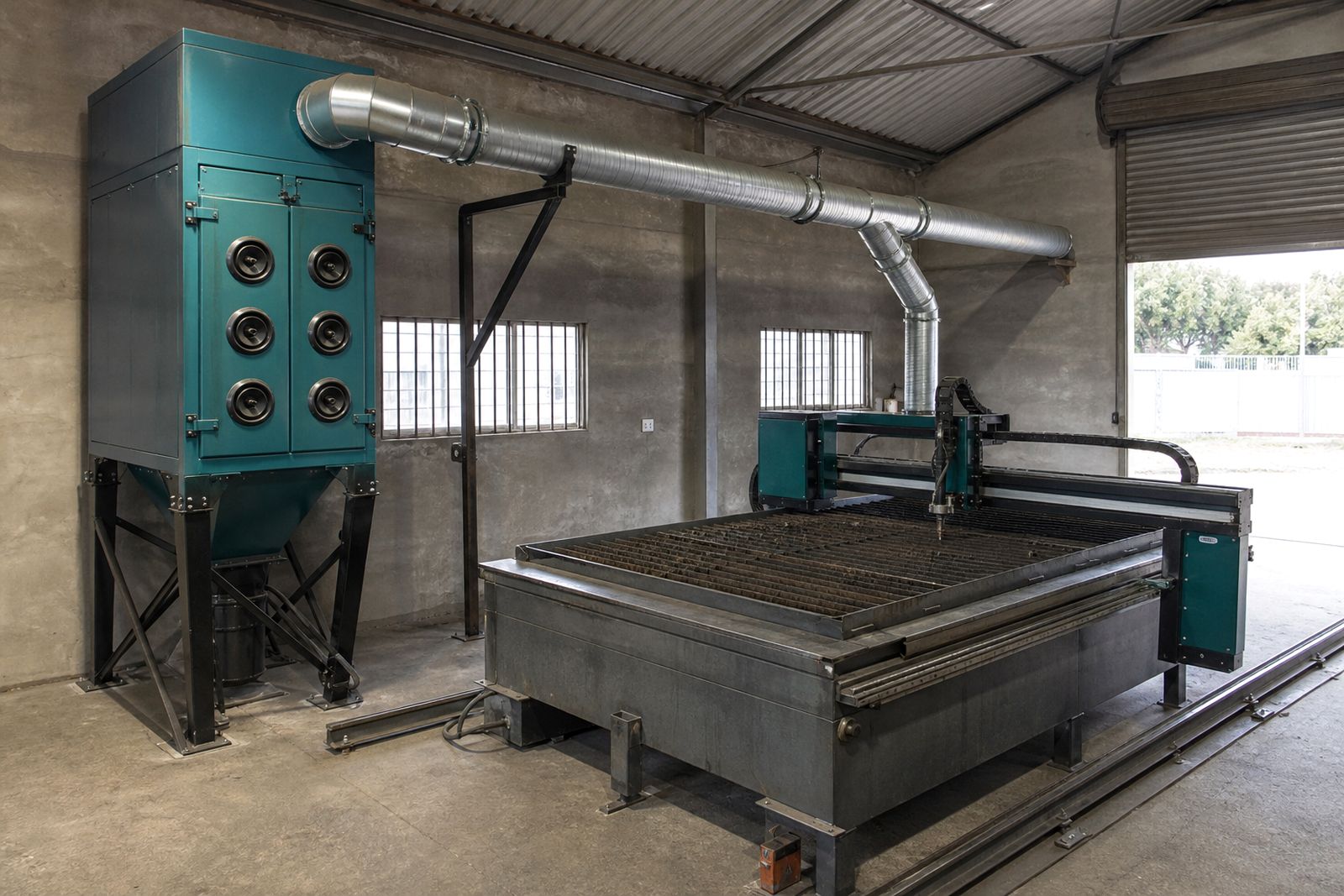
Plasma smoke does not behave the same on every table, and extraction that looks big enough on paper can still miss the cut zone. We size downdraft sections, duct runs and filter units around the table you already own so the air clears properly while cutting.
What goes into an extraction retrofit
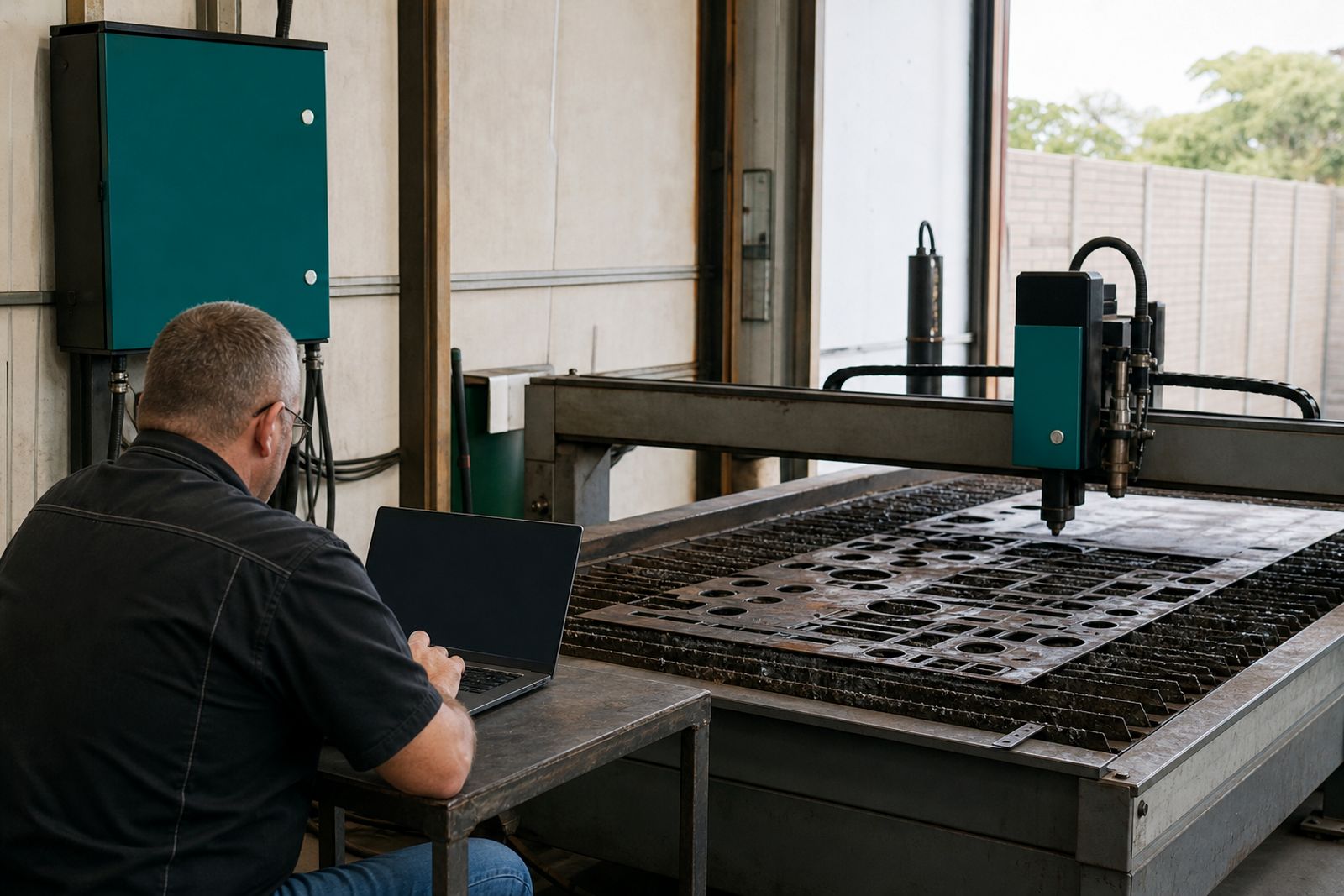
Most older plasma tables were built around motion and power, with very little thought given to how smoke would be captured once production picked up. On a retrofit we work from the bed you have, the material you cut, and the airflow path your workshop will actually allow. The aim is to pull smoke from the cut zone before it spreads across the gantry, control cabinet and operator area.
Our scope covers extraction for existing tables only. We do not supply new complete cutting machines or replacement beds. Where the table structure is sound, we add or rework the parts that make downdraft collection effective and serviceable.
- Downdraft zoning under the cutting area so suction is concentrated where the torch is working
- Duct sizing and routing to suit floor space, support steel and door openings
- Filter unit selection for airflow, dust load and service access
- Damper arrangements, trunking transitions and connection points from table to filter
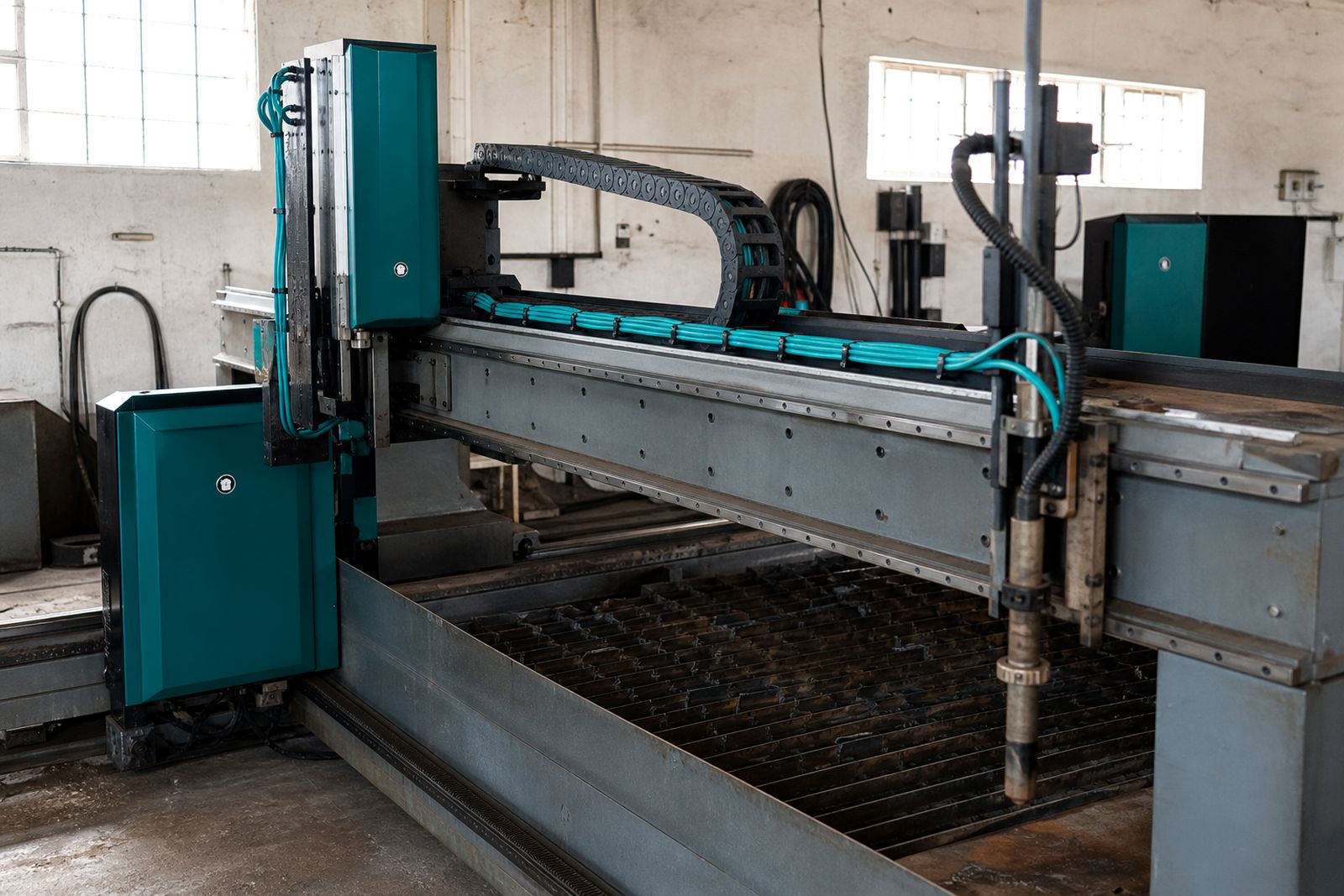
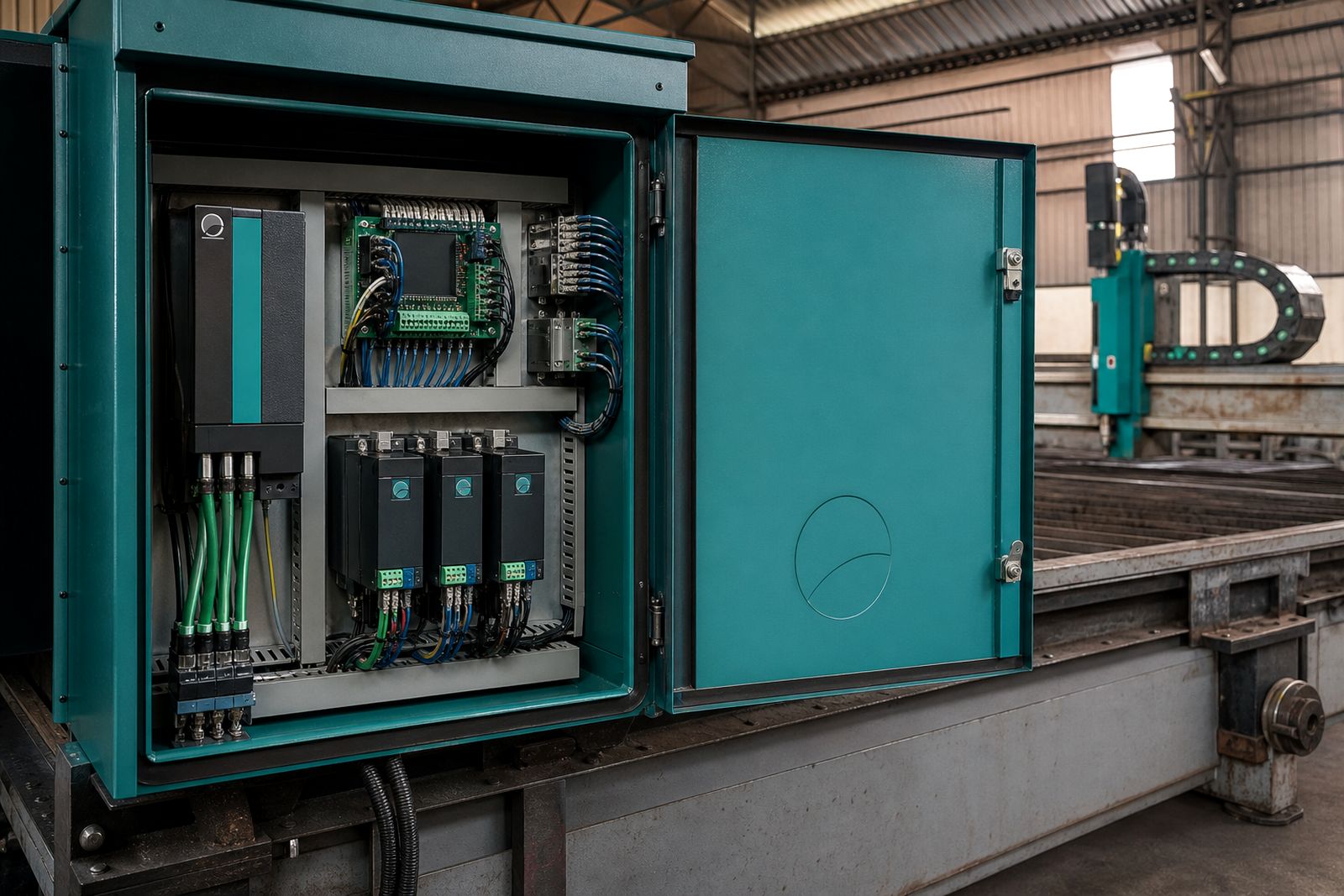
- Integration with control upgrades where extraction needs machine status signals or interlocks
- On site tuning once the system is running with your own plate and cut settings
Sizing starts with your plate, duty cycle and workshop layout
A table cutting thin mild steel at short intervals needs a different extraction setup to a table running long nests in thicker plate for most of the shift. We look at working width and length, slat area, expected kerf time, plate thickness range and whether the torch spends long periods piercing. Those details affect smoke volume, spark carry-over and how sharply the airflow has to be focused beneath the arc.
Workshop conditions matter just as much. In Gqeberha and along the coast, salt air and fine dust can shorten the life of badly placed filter housings and poorly sealed cabinets. In inland shops around Gauteng and the Free State, long duct runs and hot roof spaces can change how a fan behaves under load. We account for those realities before parts are ordered.
- Typical zoning layouts are based around table sections from 1 metre to 2 metre lengths
- Duct branches are sized to keep transport velocity up without excessive static loss
- Filter access must allow safe removal of collected dust and routine cleaning
- Fan and filter positions are planned around forklift routes, crane paths and vehicle doors
How the job runs on site
We begin with a survey of the existing table and the space around it. That includes under-table access, current slat support arrangement, available extraction openings if any, cable routes, mains supply for the extraction equipment and where the collected dust will be handled. If the machine also needs a controller or height-control upgrade, those items can be planned in the same visit so the wiring and machine states line up properly.
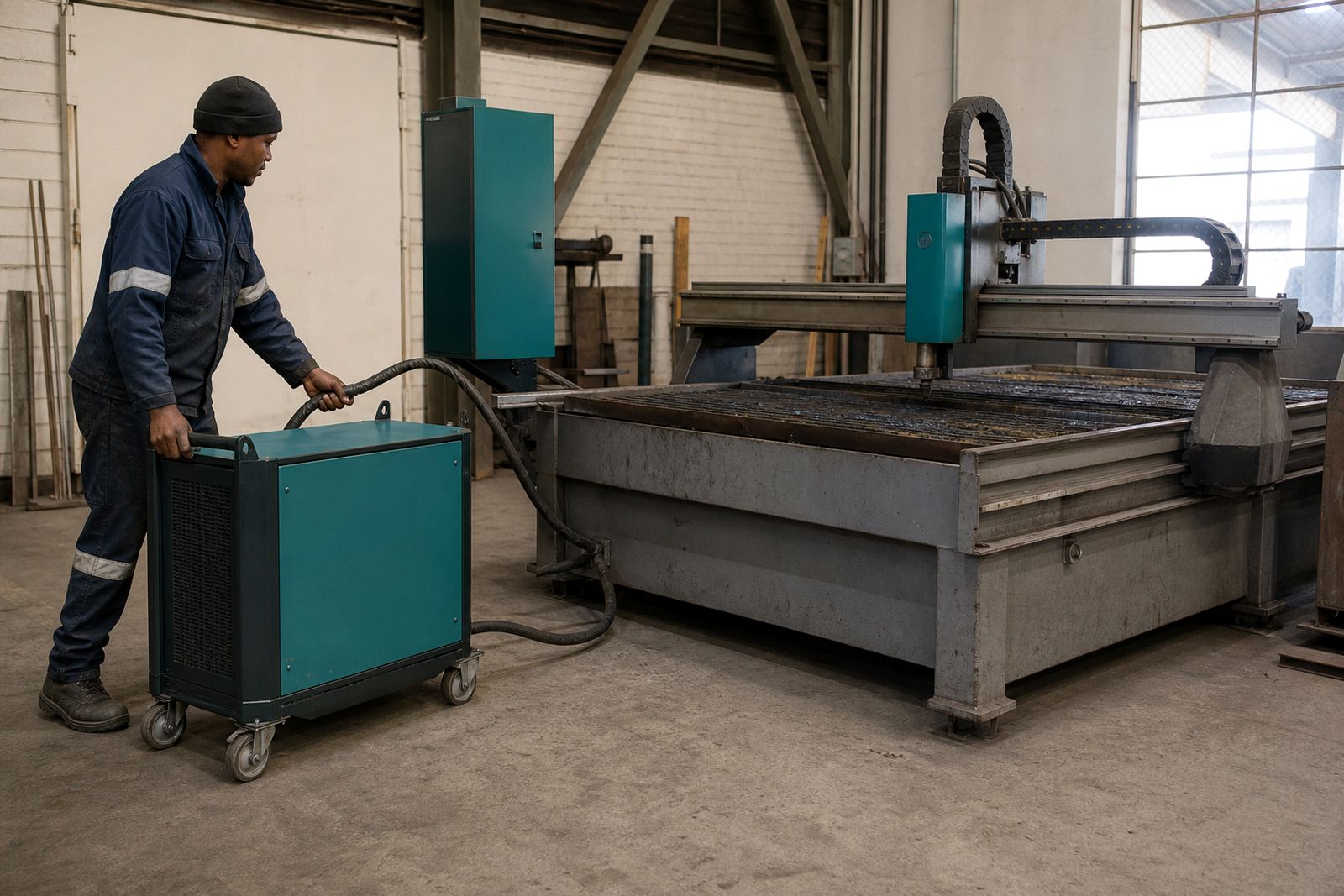
After measurement and scope sign-off, fabrication and component prep are done for the specific table dimensions. On installation days the crew fits the zoning sections, duct connections, isolation points and filter unit tie-in, then checks fan rotation, airflow direction and machine clearance through full travel. Once cutting starts we tune the extraction while the torch is working, because static readings alone do not tell the full story.
- Site measure and practical review of the existing table
- Layout proposal for zones, duct route and filter location
- Fabrication and kit preparation for the measured table
- Mechanical fitment and electrical tie-in where required
- Airflow balancing and cut tests on your material
- Handover with service points and cleaning intervals explained
What your workshop should have ready
Retrofit work moves better when the area around the table is properly cleared. The crew needs access along both sides of the machine where possible, under-table access for zone work, and a clean route for duct sections and lifting gear. If the filter unit is going outside or into a lean-to area, the final position should already be agreed with the landlord or facilities team where that applies.
You should also flag any municipal or building limits that affect penetrations, external discharge points or noise. On some premises the key challenge is the duct route through a wall or under a roof truss. If there are planned shifts during the retrofit window, mention them early so we can work around production pressure.
- Clear floor space around the table and intended filter position
- Access to mains power for the extraction equipment and controls
- Confirmation of roof, wall or yard constraints affecting duct routing
- A sample of the plate range you cut most often, if available
- One contact person on site who can approve practical placement decisions
How pricing is built up
Extraction retrofits are priced from the real work involved, with each table assessed on its own layout and requirements. Two tables with the same cutting area can differ a lot once the duct route, zone count and filter access are considered. A short straight run to a nearby unit is one thing, a route that steps around columns, cable trays and vehicle doors is quite another.
The main cost drivers are table size, the number of downdraft zones, whether the under-table structure needs modification, total duct length, the airflow duty of the filter unit, electrical integration and travel to site. If the existing table has heavy leakage points or badly distorted pans, repairs may need to be allowed for before the extraction can work as intended. We set that out clearly so you can see what is tied to airflow performance and what is tied to condition of the old machine.
For budgeting, it helps to send table cutting width and length, clear workshop photos from all four sides, the material thickness range, and whether the filter unit must sit indoors or outdoors through our contact form.
Aftercare, service points and long-term performance
A new filter unit cannot make up for poor housekeeping or blocked zones, so aftercare is practical and routine based. We show your team where dust collects first, how the zone access points are opened, and which checks should be done after heavy cutting periods. If the table also has new controls or height control, we make sure the operator understands how extraction and machine status work together.
Service life depends on keeping slat fallout, scrap and fine dust from choking the airflow path. Coastal workshops often need a closer eye on cabinet seals and exposed metalwork, and inland workshops usually battle more with general dust loading. Small checks done regularly keep suction steady and stop the old problem of smoke escaping across the bridge.
- Inspection of zone openings, seals and access panels
- Filter cleaning or element replacement to the unit schedule
- Checks on fan rotation, vibration and duct support points
- Review of airflow if cut mix changes sharply from the original brief
- Support for future table changes such as controller or power-source upgrades
What our Plasma Retrofit customers say
Verified Google reviews
Questions we get asked
Can you fit extraction to an older table that never had it before?
We can, provided the existing table structure gives us a workable base for zoning and duct connection. During the survey we check under-table access, leakage points and whether any repairs are needed before extraction parts are fitted.
Do you sell complete new plasma tables with extraction?
Our work is focused on retrofitting and improving tables already in service, including controls, height control, software, power-source pairing and extraction.
Will extraction sizing be based only on table size?
Table size is one part of the sizing. Cut duty, plate thickness, pierce time, duct route, filter position and workshop conditions all affect the final result. That is why we measure the site as well as the bed area.
Also worth a look
Tell us about the job
Send sizes, materials and where you are through our contact form, and we will come back with the practical options.
Open the contact form