

Power-source pairing
A plasma table only cuts properly when the power source, controller and height control are speaking the same language. We pair new plasma power sources to existing tables, then tune the setup on site so cut quality, pierce control and consumable life make sense in daily production.
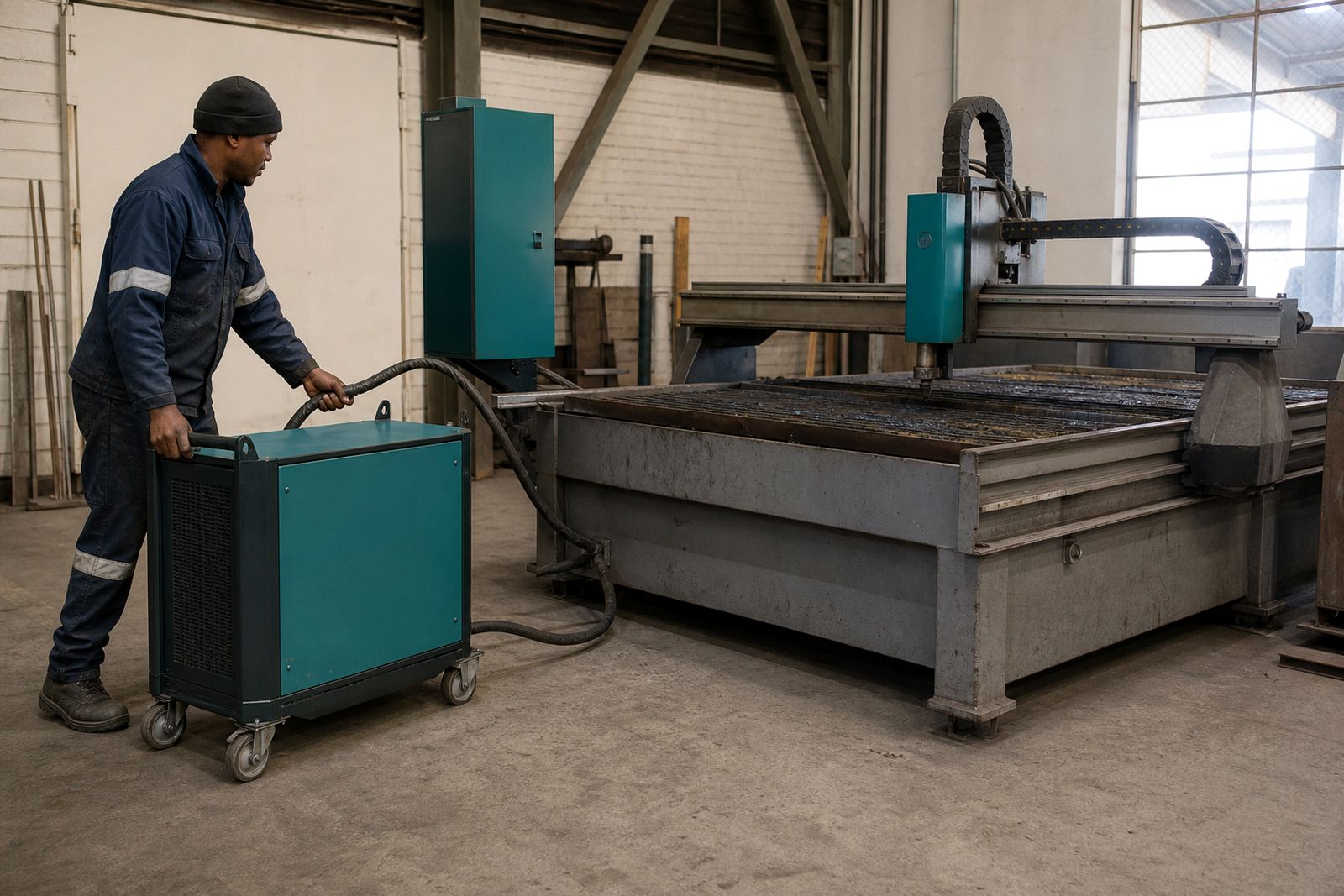
Pairing the source to the table you already have
This service is for workshops that already own a CNC plasma table and need a better-matched cutting source on it. We do not sell complete new machines, table beds or used machines. The work is centred on choosing a suitable plasma power source for the table width, rail condition, drive accuracy, controller output options and the material range you actually cut.
On older gantry tables, poor results are often blamed on the wrong thing. The issue may look like a software fault or a height-control fault, while the main limitation is that the source is oversized, undersized, badly wired or not integrated cleanly with the controller. Pairing sorts that out before money is wasted on random parts.
- Cut-current range matched to plate thickness and duty cycle
- Interface wiring between source, controller and torch-height control
- Pierce timing, arc-transfer and motion timing checks
- Kerf and speed setup for the materials you cut most
- Consumable selection guidance for production work and lighter jobs
What is included on a typical pairing job
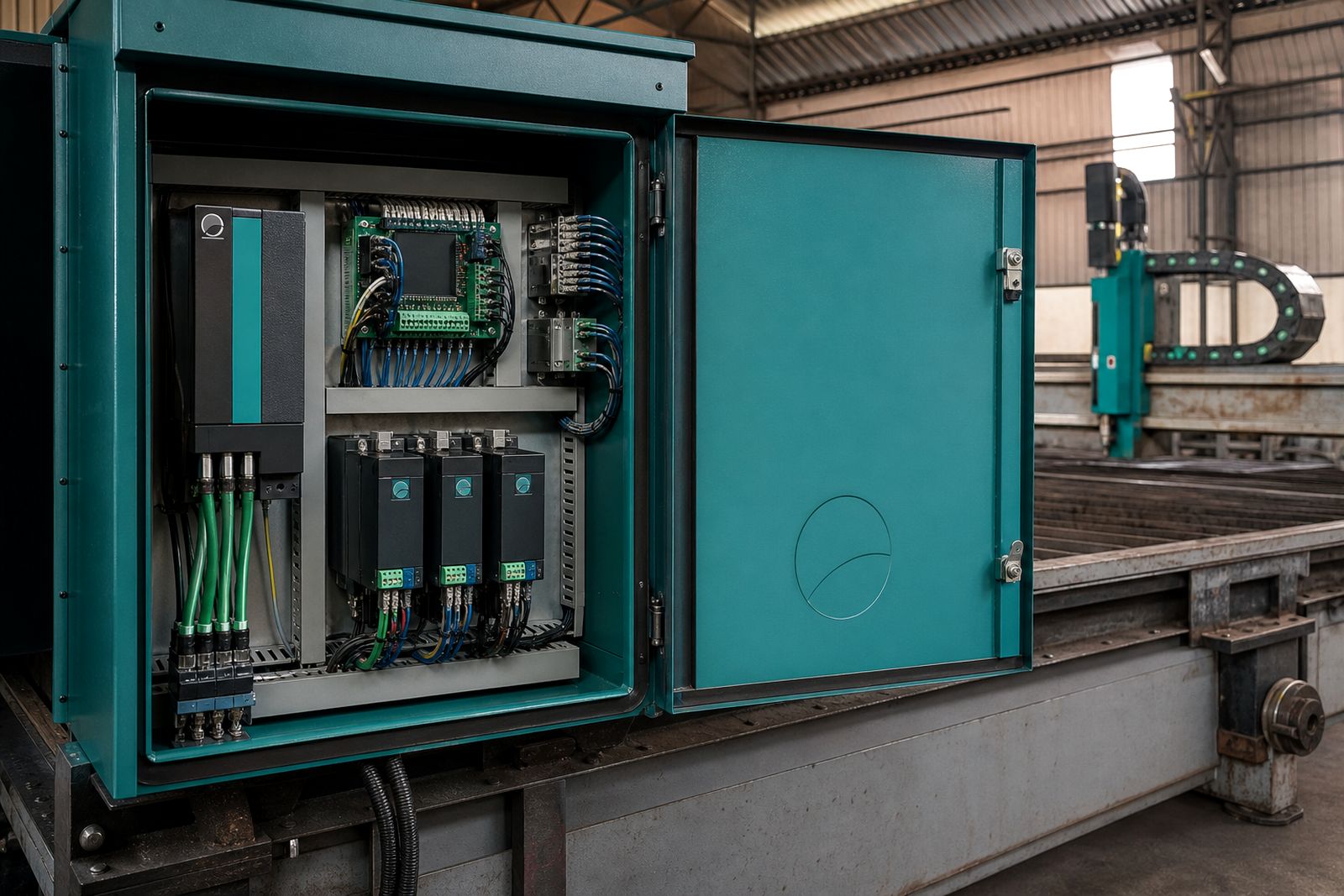
Most jobs start with a look at the present table, controller cabinet and cutting requirements. We check axis condition, earthing, available supply, cable routing, extraction arrangement and whether the existing control can read the signals needed for proper plasma operation. If the table also needs controller changes or a height-control upgrade we will say so plainly.
Installation usually covers the mechanical placement of the source, signal integration, torch trigger control, arc-ok connection, divided-voltage or direct-voltage handling where suitable, and parameter setup inside the controller or software workflow. Once that is done we cut sample parts and adjust until motion, height and plasma output are working together.
- Site inspection of the table, cabinet and mains supply
- Power-source sizing guidance for amperage and duty cycle
- Control integration and signal testing
- Torch-height control setup or correction where needed
- Trial cuts in customer material with parameter adjustment
- Operator handover for everyday running and basic fault checks
How the job runs on site
First we gather the basics through our contact form: table size, controller type, material thickness range, common plate sizes, available supply voltage and the town where the work will be done. Photos of the control cabinet, gantry and torch carriage help, especially when the table is far from Gqeberha.
After that we review compatibility and outline the practical route. Some tables need only a source change and wiring. Others need a controller output check, relay changes, height-control setup or a cleaner extraction arrangement to keep arc voltage stable. Coastal sites often need extra attention inside the cabinet because salt air and fine dust build up where terminals and boards should stay clean.
On installation day the source is mounted, connected and tested through dry runs before cutting starts. We then set pierce height, cut height, lead-ins, feed rates and arc-voltage behaviour on sample parts. Final tuning is done on your own steel or stainless, with settings matched to real production conditions. If the table has wear in the drives or slop in the torch carrier that shows up quickly and we deal with it in the tuning, though sometimes mechanical alignment needs separate work.
What your workshop should prepare
A pairing job goes better when the table is accessible and the basic services are ready. Please have the cutting area clear enough for side-panel access, cable routing and test cutting. We also need the operator or maintenance lead available while the system is being proven, because local habits around pierce delay, sheet condition and extraction use matter more than many shops expect.
- Stable mains supply at the required voltage and breaker capacity
- Clear access to the control cabinet and the plasma table sides
- Usual production material on hand for test cuts
- Compressed air supply in spec if the source requires it
- Existing wiring diagrams if you have them
- A safe extraction route or fume-capture arrangement in place
If the table is in East London, Makhanda, Kariega or further inland, send the travel location with the first enquiry so site planning can be set properly. Crews also travel to the Western Cape, Free State and Gauteng for retrofit work on existing tables.
How pricing is worked out
Price depends on the amount of integration work rather than amperage alone. A straightforward pairing on a table with a healthy controller, tidy cabinet and compatible height control is usually simpler than a site where signals are missing, extraction is poor and the cable management needs rebuilding. Travel, site duration and whether extra retrofit parts are required will also affect the total.
In general terms, we look at the power class required, interface hardware, any cabinet changes, commissioning time and the amount of cut testing needed to reach stable production settings. Shops cutting mostly mild steel in a narrow thickness band are easier to dial in than workshops moving between thin sheet, thicker plate and mixed materials through the week.
If you want us to assess a table for pairing work, send the present controller details, torch-height control details if fitted, table cutting width and length in metres, available electrical supply, and the thickest material you expect to pierce and cut. That gives enough to map the job properly.
Aftercare and operating notes
Once the system is paired and tuned, we leave the workshop with a working cut file set, baseline cutting parameters and practical notes for the operator. These values are based on how your table tracks, how your material behaves and how well extraction is pulling fumes away from the cut zone.
Aftercare normally covers advice on consumable wear patterns, earth clamp placement, torch lead handling, moisture management in air lines and the warning signs that tell you the problem is mechanical rather than electrical. That matters on older tables because a source can be perfect and still give poor edges if backlash or torch wobble is left unattended.
Where a table is near the coast, cabinet sealing, filter cleaning and corrosion checks should be part of the maintenance routine. Salt air gets into terminals and fan paths quietly, then faults start showing up as random signal trouble. If your setup also needs controller work or height-control changes, those services are covered elsewhere on this site and can be scheduled as part of the same retrofit path.
What our Plasma Retrofit customers say
Verified Google reviews
Questions we get asked
Can you pair a new source to an older gantry table?
We can, if the table motion, controller outputs and electrical condition are suitable. Older tables often benefit from pairing work, but badly worn mechanics or poor cabinet condition may need attention first.
Do you sell plasma tables or used machines?
The work is limited to retrofits on existing tables, including controls, height control, software, power-source pairing and extraction arrangements.
What details should I send for an assessment?
Send table size, controller type, material thickness range, available mains supply, town, and a few clear photos of the cabinet, gantry and torch area through our contact form.
Also worth a look
Tell us about the job
Send sizes, materials and where you are through our contact form, and we will come back with the practical options.
Open the contact form