
Workshop log
Field notes from plasma retrofit work on older cutting tables around the Eastern Cape and farther inland, covering common table faults, control upgrade paths and site conditions before you decide how far a retrofit should go.
Workshop faults, inspections and retrofit decisions
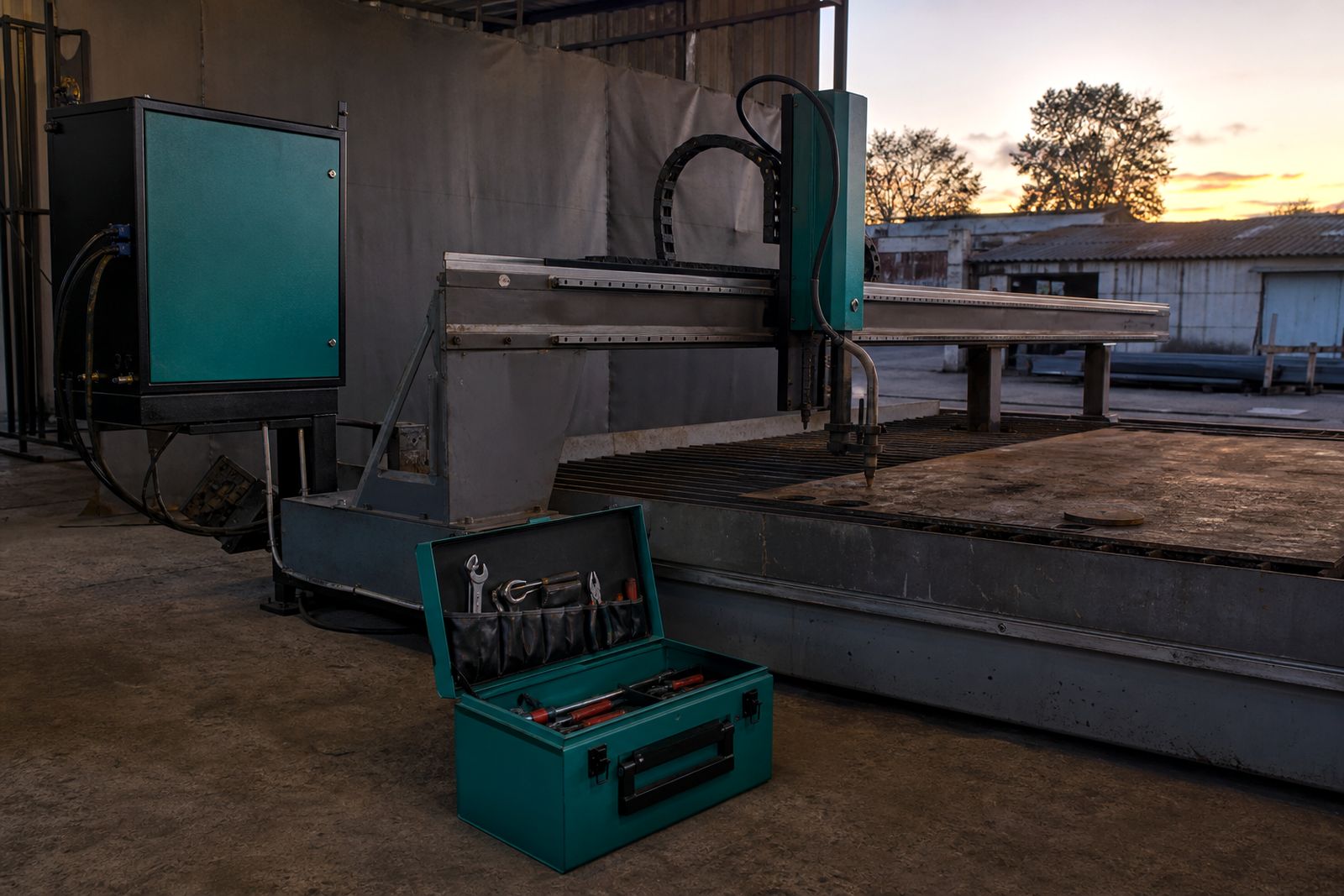
Retrofit jobs, inspections and strip-downs on existing plasma tables often turn up the same practical issues. Some cases focus on one fault, such as unstable arc voltage or poor earthing. Others look at a broader question, like whether an old gantry is worth saving when the rails, cable tracks and slats have all had a hard life.
The focus stays on retrofit work on existing tables: controller swaps, torch-height control, nesting and CAM setup, power-source pairing, extraction changes and the mechanical condition around those items. In coastal towns the cabinet and wiring story can be very different to an inland job, so place matters more than many owners expect.
Start with the part that is holding cuts back
Many tables respond well to staged upgrades, with attention going first to the system that is costing the most plate, time or operator attention. A fair reading of the machine starts with the fault that is costing the most plate, time or operator attention. If motion is smooth but cut height wanders, the height-control side usually comes first. If the table tracks badly, loses position or the old interface can no longer be supported, the control layer is normally the better starting point.
- Choose a controller-focused article when the screen, drives, I/O or motion behaviour are the main problem.
- Choose a height-control article when dross, tip crashes or inconsistent pierce height are the daily complaint.
- Choose a structure and motion article when rails, gear racks, bearings or gantry straightness are already affecting repeatability.
- Choose a software article when nesting waste, slow programming or poor drawing import is hurting production more than the machine itself.
This approach helps separate cutting faults caused by settings from faults caused by worn mechanics, and that saves a lot of guessing later on.
Common retrofit routes on older gantry tables
On many Eastern Cape workshop floors the machine frame is still usable while the control side has dated badly. That makes a staged retrofit sensible. We often see tables where the steelwork can continue after alignment and local repairs, while the cabinet, height control and software need a complete rethink. In other cases the frame has enough twist or wear that electronics alone will not steady the cut.
- Light retrofit: controller change, new height control, software setup and site tuning on a sound table.
- Mid-level retrofit: the above plus drive checks, cable management, switchgear clean-up and operator station changes.
- Heavy retrofit: structural work, rail and motion rebuild items, extraction changes and a fresh control package.
If you are comparing articles, look for clues about which route the machine fits. Repeated torch crashes, ragged corners and changing consumable life often point to attention across several layers of the table, including settings, motion and height control.
Coastal shops read differently to inland sites
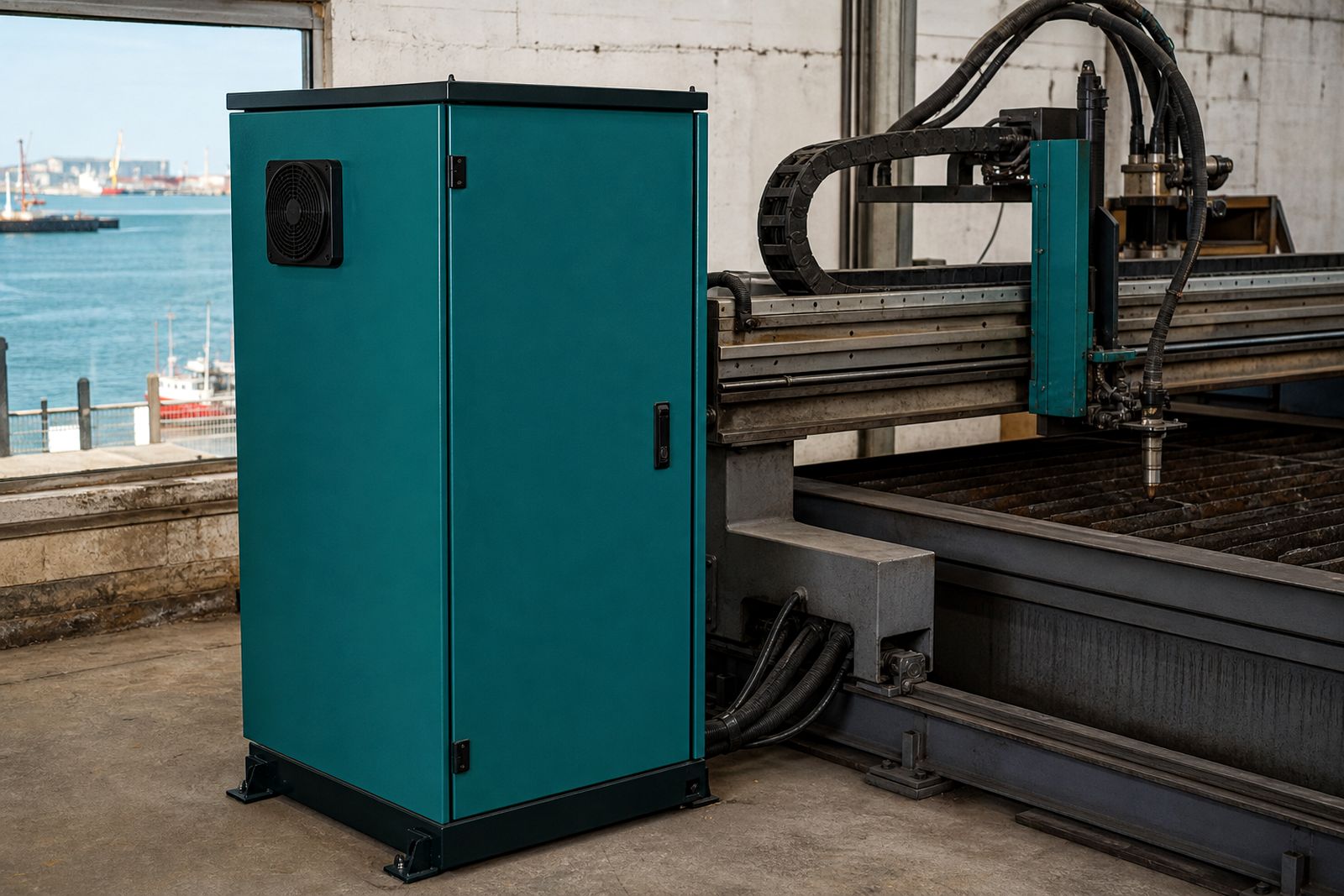
Gqeberha and East London jobs often show the same pattern: cabinet dust mixed with damp air, terminal corrosion, sticky fans and connectors that look fine until they are unplugged. A table can still cut in that condition, but faults become harder to pin down and random stops start showing up at the worst time. Inland work in the Free State or Gauteng may have less salt in the air, yet heat, fine dust and neglected extraction bring a different set of headaches.
Environment matters as much as electronics on many of these jobs. A retrofit that runs well near the coast needs careful cabinet sealing, sensible airflow and component placement that takes local conditions seriously. It sounds minor, but it changes service life quite a bit.
What to compare while reading the log
Some cases are short fault notes and others are wider decision pieces. The easiest way to use them is to compare your own table against a few fixed checkpoints rather than trying to match every symptom line for line.
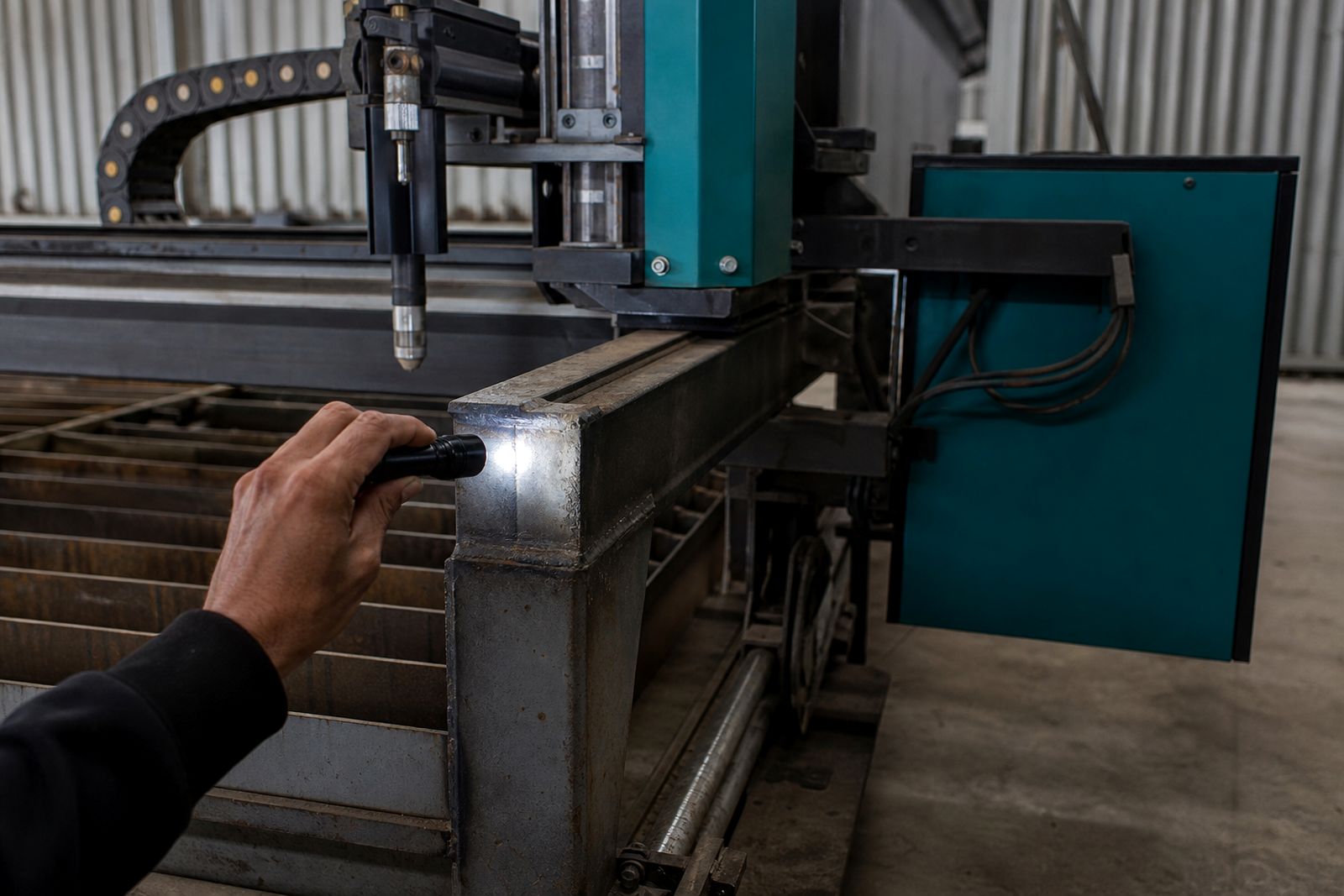
- Mechanical condition: backlash, rail wear, wheel play, gantry squareness and cable chain condition.
- Electrical condition: cabinet cleanliness, grounding, switchgear age, drive stability and spare part availability.
- Cutting control: torch-height behaviour, pierce timing, arc voltage stability and cut recovery after small faults.
- Software flow: drawing import, nesting efficiency, post settings and how many manual edits the operator makes per job.
- Extraction and smoke handling: downdraft performance, duct routing and whether fume buildup is affecting visibility or cabinet health.
Where your machine lands on those five points usually makes the right article choice fairly obvious, even before a site visit. If the frame and rails are honest but the cut quality has drifted badly, the answer is often in controls and height management.
Narrow the retrofit scope before planning the job
Owners, workshop managers and operators can narrow the job before asking for a retrofit plan. One article may show that the table is a fair candidate for a controller swap. Another may show that adding software without fixing motion faults first will only hide the real problem for a while.
If your table is in Gqeberha, Kariega, Makhanda or East London the same basic checks apply, but the site details never read exactly alike. Plate thickness range, production hours, extraction layout and the condition of the existing power source all change the shape of the work. Use our contact form when you are ready to describe the table, the main faults and the town where it is installed.
Questions we get asked
Do these workshop notes apply only to tables in the Eastern Cape?
Many examples come from Gqeberha and nearby towns, but the same retrofit questions turn up on travelling jobs in the Western Cape, Free State and Gauteng. Site conditions differ, especially with salt air and dust, so the detail matters.
Can an older plasma table be upgraded in stages?
Often yes. A machine may start with a controller swap or torch-height control upgrade, then move to software, extraction or motion work later. The right order depends on whether the main loss is cut quality, reliability, plate waste or mechanical wear.
Do you sell new machines or used tables?
The focus is on improving existing cutting tables through retrofit work, including controller upgrades, height control, software, extraction and motion-related work on the table itself.
Tell us about the job
Send sizes, materials and where you are through our contact form, and we will come back with the practical options.
Open the contact form