Controls
A control retrofit changes how an older plasma table behaves on the floor. We match controllers, drives and torch-height control to the mechanics you already own so cuts clean up and the table becomes easier to run.
What sits inside a sensible control retrofit
On an older table, the control side is usually where daily trouble starts. Unstable arc-height, dated motion hardware, poor screen layout and awkward file handling all add up to slower cutting and more scrap than there should be. Our controls work centres on replacing those weak points without forcing you into a complete new machine purchase.
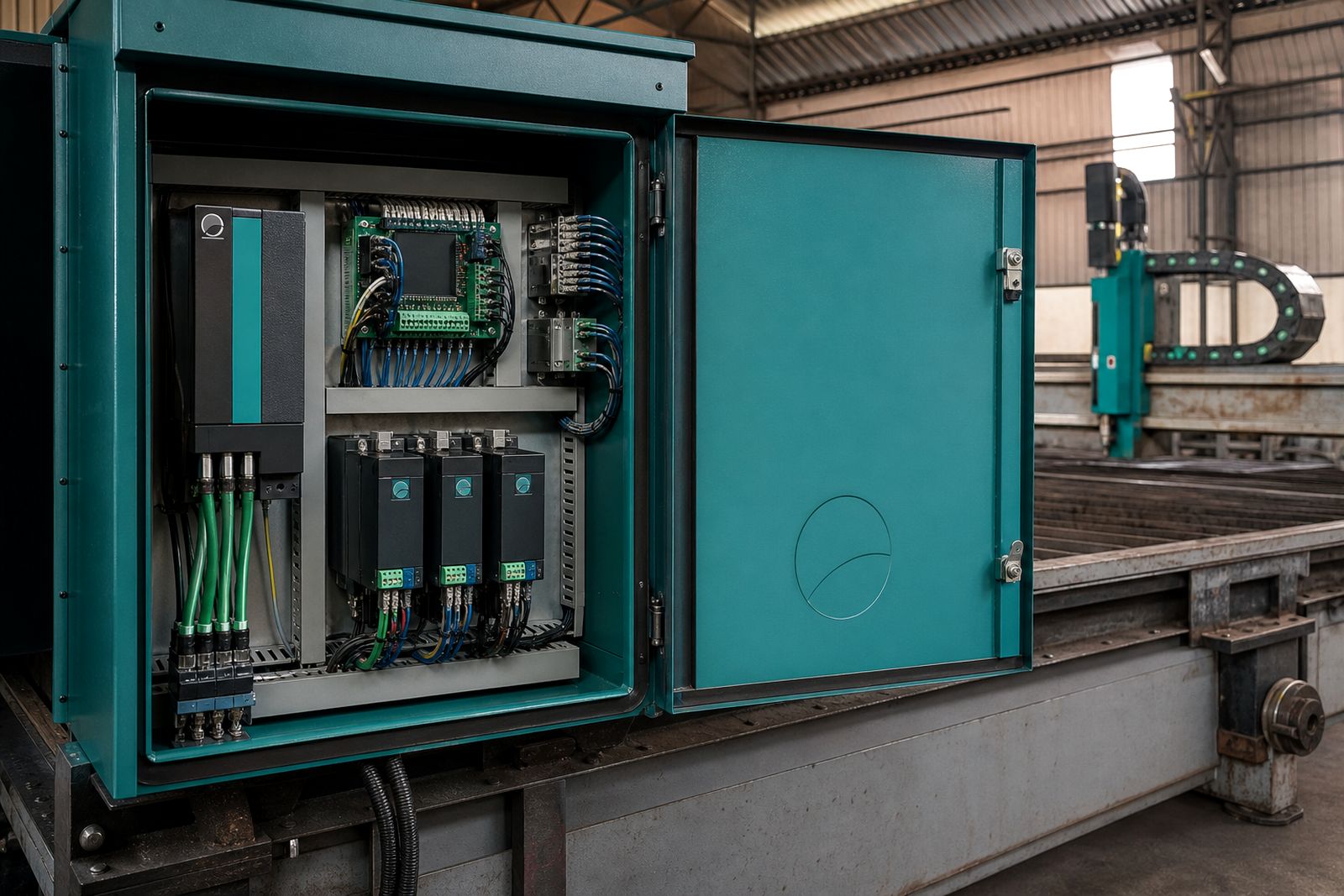
A retrofit can cover the operator control, motion drives, interface hardware, torch-height control and the software link between drawing, nesting and cutting. We also look at the plasma power source already in the workshop, because the cleanest control package still needs the arc signals and cut parameters to behave properly with the source in use.
- CNC controller replacement for older gantry tables
- Drive and motion interface updates where the existing hardware is unstable
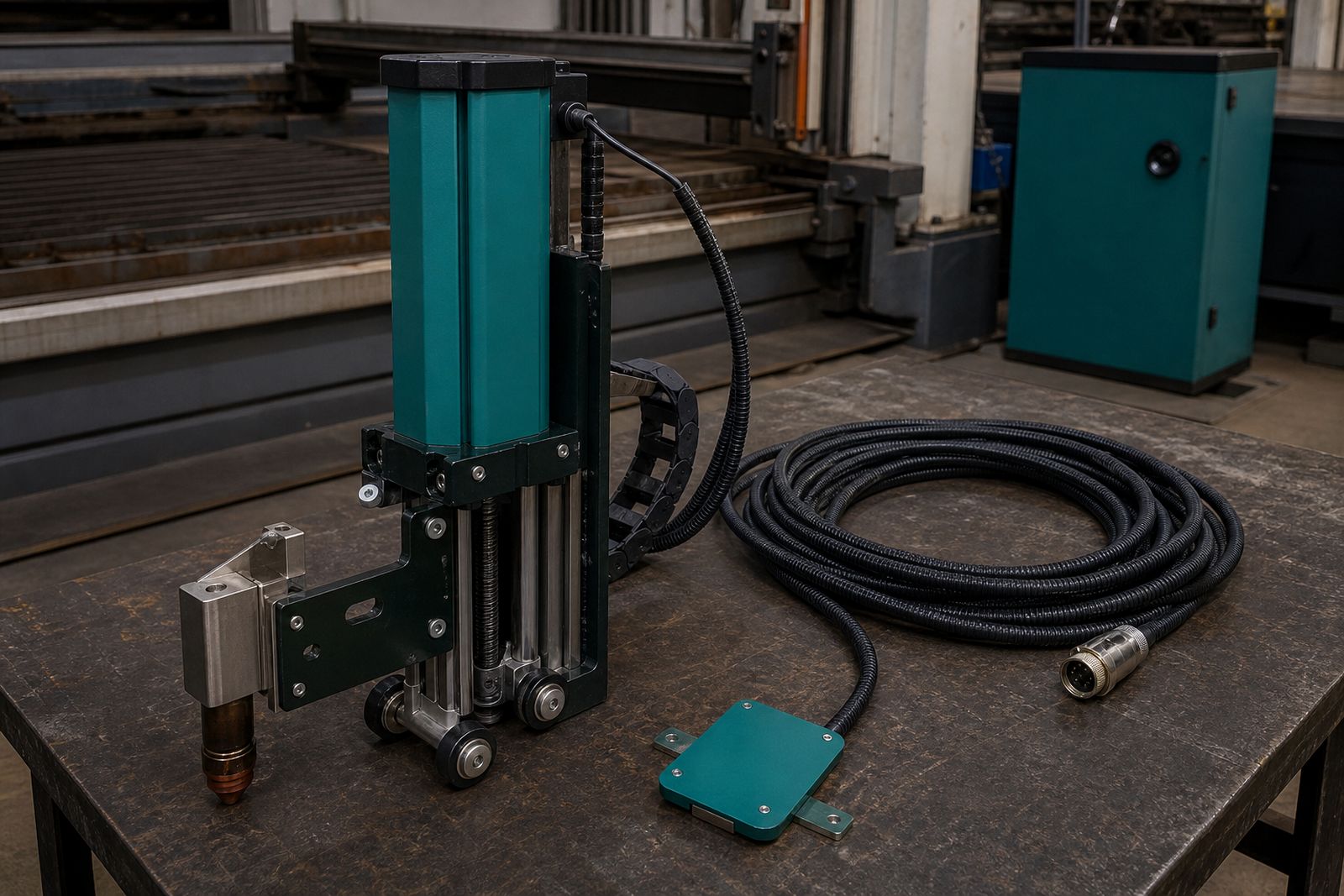
- Torch-height control units for automatic height setting during the cut
- Software connection for drawing import, nesting and cut path output
- On-site tuning to suit rail condition, acceleration and actual plate work
Choosing between a controller swap and a wider control rebuild
Not every table needs the same level of intervention. Some machines have sound motors, clean motion and a usable electrical layout, but the front-end controller has become unreliable or difficult to support. In that case a controller swap is often enough. Other tables have mixed hardware from several eras, damaged wiring and weak feedback to the operator, so a broader control rebuild makes more sense.
- Pick a controller swap when the mechanics still track square, the drives are healthy and the table mainly needs a new operating brain.
- Choose a wider control rebuild when faults move around, drive behaviour is inconsistent or electrical noise keeps upsetting the system.
- Add software work when operators spend too long cleaning imported files or manually placing parts on sheets.
- Include extraction and power-source pairing where smoke, dross and erratic arc transfer are affecting cut quality.
That decision is easier when the table is checked as a whole instead of treating the screen in isolation. A smart control on worn motion can only hide so much.
Controller features that matter on a plasma table
Plasma cutting asks different things of a controller than routing or light engraving. Height changes happen quickly, pierce timing matters, and the table must react sensibly when plate is warped or the cut path gets tight. Good control hardware should help the operator manage those conditions without constant workarounds.
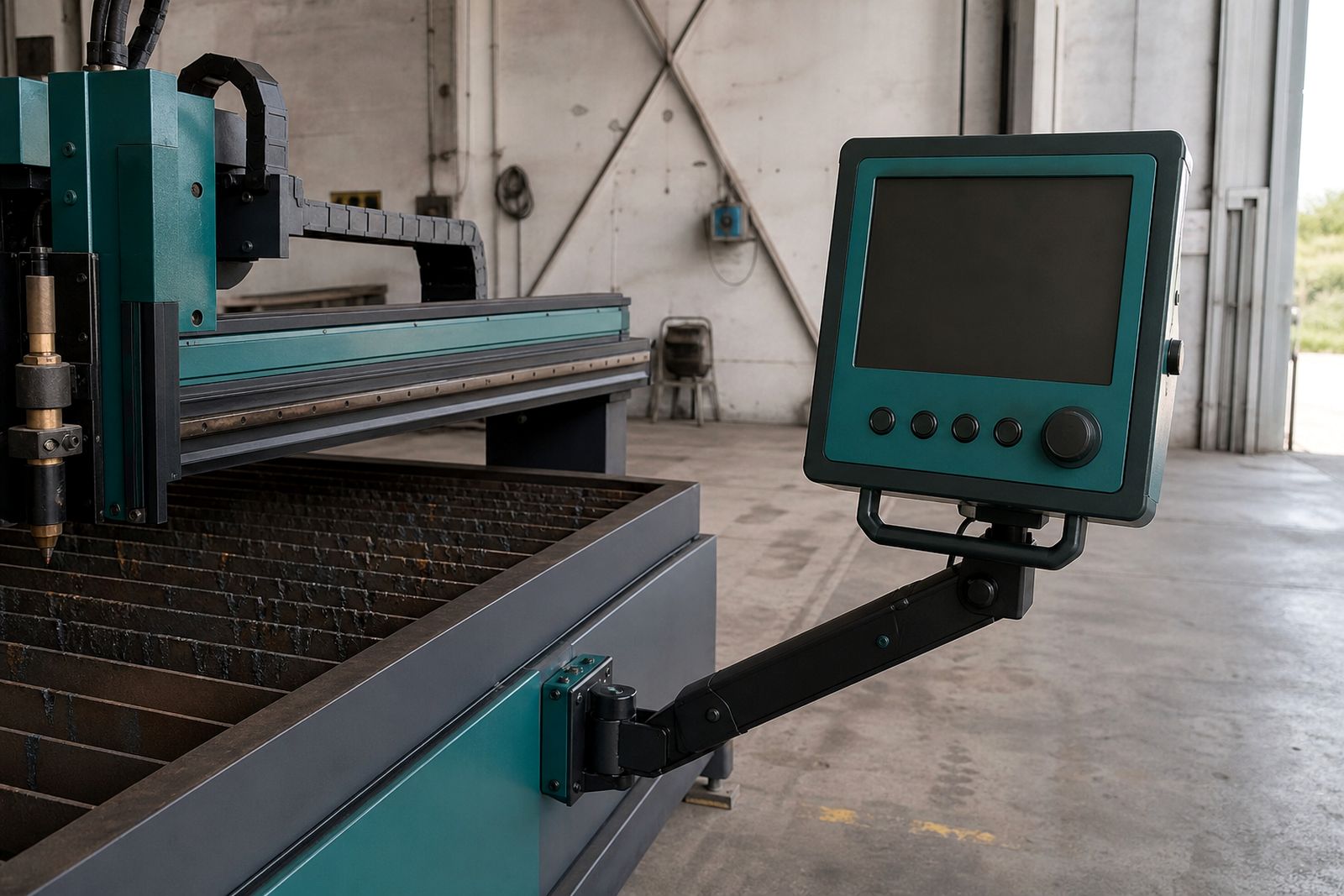
We look for practical gains rather than feature lists padded for sales sheets. File loading should be straightforward, job setup should be easy to repeat and the cut screen should show the information an operator actually needs while standing at the table.
- Stable motion at corners and small holes
- Clear cut parameter handling for pierce height, cut height and delay
- Reliable I/O for arc-ok, transfer and emergency stop circuits
- Useful screen workflow for operators wearing gloves in a busy workshop
- Support for nesting and CAM output without awkward manual edits
Torch-height control for reliable plasma cutting
On many older tables, poor height control causes more quality loss than worn consumables do. If the torch runs too high, the edge angle worsens and small details wash out. Too low, and nozzle damage climbs fast. Automatic height control keeps the torch where it should be while the sheet moves, lifts or distorts under heat.
Height control also helps an older table cut with fewer interruptions because the machine spends less time recovering from bad pierces and dragged tips. Where the mechanics are still serviceable this one upgrade can make the table feel very different to run, and that's often noticed on the first production nest.
- Better pierce clearance on thicker plate
- More consistent cut height through warped sheets
- Less nozzle contact with tipped-up parts
- Cleaner edge quality on mixed jobs with small internal profiles
Drives, wiring and cabinet work around the controller
A new control screen cannot rescue poor cabinet practice. We inspect drive condition, cable routing, earthing, switchgear and the way arc signals enter the control cabinet. In coastal workshops around Gqeberha and East London, salt air and damp can speed up corrosion on terminals and connectors, which then shows up as random faults and intermittent communication loss.
When a retrofit is planned properly the cabinet ends up easier to service and less cluttered. Signal paths are clearer, replacement parts are more sensible to source and the operator does not have to remember a long sequence of workarounds before a sheet can be cut.
On tables travelling for jobs into Gauteng, the Free State or the Western Cape, we still tune the control around the actual mechanics on site. That matters because acceleration, backlash and gantry condition vary more than many owners expect.
How to narrow the right option for your table
The starting point is the present condition of the machine. We need to know what the table cuts now, what faults interrupt production and whether the motion system is worth keeping. Once that is clear, the control package can be sized properly.
- If cut quality changes from one sheet to the next, start with height control and arc signal checks.
- If the machine runs but the operator interface is dated or unsupported, look at a controller swap.
- If the table loses position, shudders or trips unpredictably, inspect drives and cabinet hardware with the controller.
- If programming takes too long, add nesting and CAM software to the retrofit scope.
- If smoke hangs around the gantry and contaminates parts, include extraction with the control work.
Use our contact form with the table size, current control make, plasma source model and a short note on the faults you are seeing. Photos of the cabinet, gantry and operator screen help us judge whether a neat control retrofit is the right route or whether the machine first needs structure and motion attention.
Questions we get asked
Can you fit controls to any old plasma table?
Many older tables can be retrofitted, but not every one is a good candidate. We first look at gantry condition, rail wear, drives, wiring and whether the machine can hold position consistently.
Do you sell complete new plasma tables?
Our work is focused on retrofitting existing tables with controls, torch-height control, software, power-source pairing and extraction improvements.
Will a new controller fix poor cut quality on its own?
Sometimes, but not always. If height control, arc signals, drive tuning or mechanical wear are the real cause, those items need attention as part of the retrofit.
Tell us about the job
Send sizes, materials and where you are through our contact form, and we will come back with the practical options.
Open the contact form