

Torch-height control units
Torch-height control keeps the nozzle at the right cutting distance while the plate moves, lifts and heats. On older plasma tables, a proper unit with the right lifter and sensing method can clean up edge quality, reduce consumable wear and stop needless crashes.
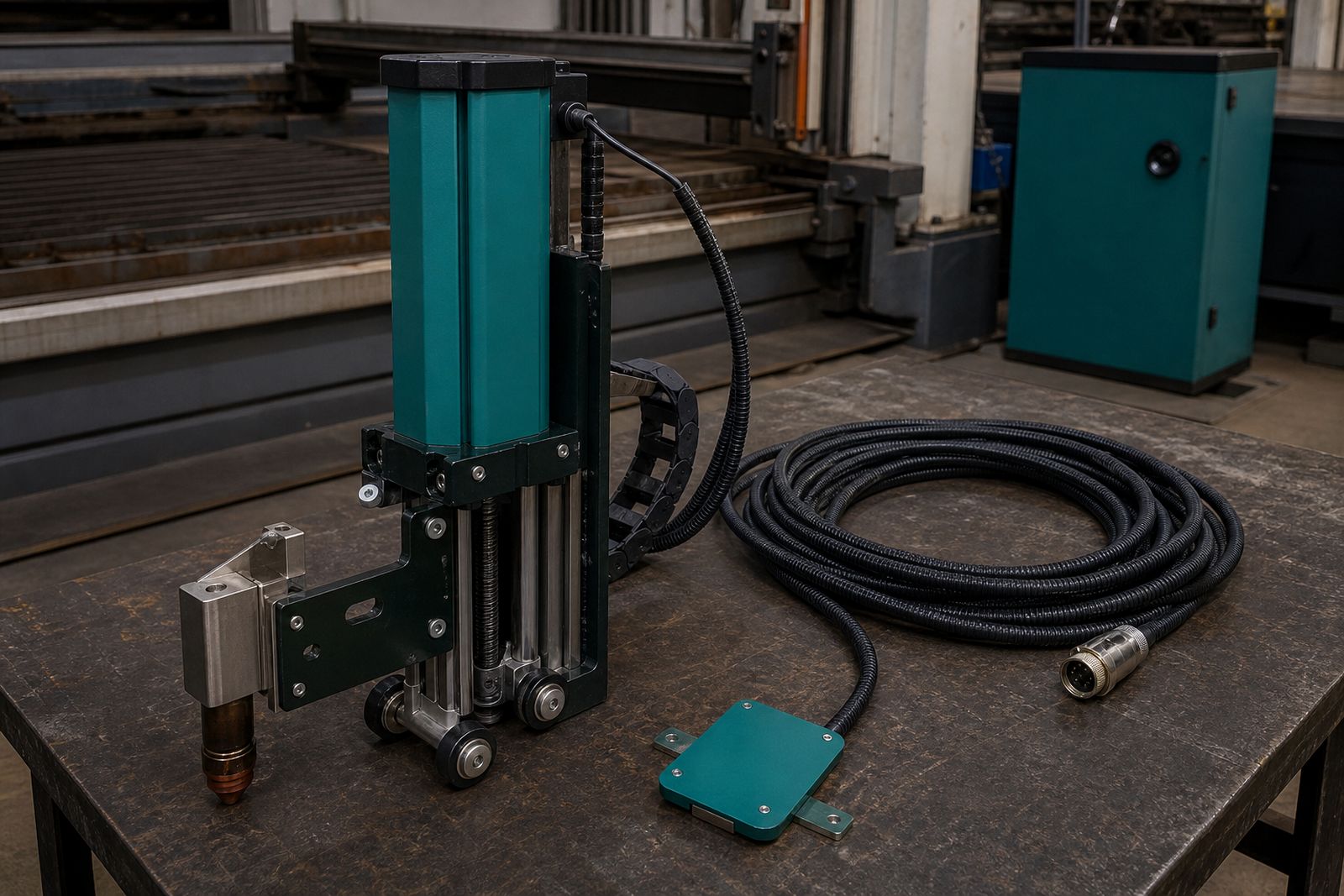
What the unit actually does on a plasma table
A torch-height control unit manages two separate jobs. First, it finds the plate before the cut starts by using initial height sensing. Second, once the arc is established, it watches arc voltage and adjusts the torch up or down to hold the target stand-off while the sheet distorts from heat.
On many older tables the motion still works but the torch runs at a fixed height, or the lifter reacts too slowly for corrugated plate and warped offcuts. That is where a proper control package helps. The controller, the height unit and the lifter need to agree on pierce height, pierce delay, cut height and anti-dive behaviour, otherwise the machine still cuts rough even with new electronics fitted.
- Arc-voltage sensing for live cut height correction
- Initial height sensing for repeatable plate touch-off before each pierce
- Anti-dive logic to stop false downward moves in corners and slow sections
- Lifter control matched to the weight and speed of the torch carriage
Sensing methods and lifter options
Most retrofit jobs use arc-voltage sensing during the cut, with ohmic or floating-head sensing for the first touch. Ohmic sensing is useful on clean conductive plate and gives a light contact. A floating-head arrangement is often the safer choice where rust scale, painted stock or dirty water-table conditions make electrical contact unreliable. In some shops we fit both, with one acting as the fall-back method.
Lifter choice matters more than many owners expect. A light duty lifter can work well on thin sheet at moderate speed, but it will struggle if the carriage is heavy or the table cuts thicker plate with a long pierce cycle. We size the lifter around available travel, carriage mass and the speed needed to recover height over uneven material.
- Compact lifter with about 100 mm to 150 mm usable travel for lighter gantries
- Medium travel lifter with about 150 mm to 200 mm travel for general fabrication work
- Heavier lifter assemblies for larger torches, thicker plate work and rougher table conditions
- Floating-head switch packages where mechanical plate detection suits the machine better
On coastal sites around Gqeberha and East London, cabinet sealing and clean earthing also matter. Salt air and fine steel dust can upset low-level sensing if the installation is untidy, so we keep an eye on cable routing and enclosure condition during the retrofit.
Working limits, sizes and where it fits best
Torch-height control gives the biggest gain on gantry tables that already have sound rails, drives and a reasonably straight torch slide. If the table frame is badly twisted, the Z axis is loose, or the carriage binds in travel, the best height unit in the world cannot hide the mechanical faults.
As a practical range, we normally look for lifter repeatability in the small fractions of a millimetre, enough vertical speed to track normal plate movement, and sufficient clearance for pierce height on the thickest work the table sees. Thin sheet production needs close height tracking and good anti-dive settings. Heavier plate wants stable initial sensing and enough lift travel to cope with slag build-up and plate movement.
- Well suited to older CNC plasma tables with usable gantries and serviceable drives
- Useful where nozzle crashes, dross lines and poor consumable life point to bad cut height control
- Less suitable where the machine has severe backlash, bent slides or an unreliable plasma power source
- Not intended for complete new machines, replacement beds or used machine sales
Site requirements before we fit and tune
We install and tune these units on site because the height control has to work with the real table, the real power source and the material your workshop cuts every week. A clean control cabinet, stable mains supply, decent earthing and space for a lifter cable chain run all help. If the existing wiring is brittle, oil-soaked or full of jointed repairs we may recommend tidying that first.
Where a table has fume extraction or a water tray, we also check whether rising vapour, dust and spatter are likely to interfere with sensors and connectors. On some municipal sites extraction duct routes and fan placement need planning around existing workshop rules and wall penetrations.
- Accessible torch carriage and Z axis for mounting and alignment
- Control cabinet room for the height unit, interface hardware and clean terminations
- Usable machine drawings or clear photos if drawings are long gone
- Test material on site for tuning pierce height, cut height and voltage set-up
Care, checks and the signs a unit needs attention
Height control units need a clean torch slide, secure plugs and sensible consumable changes in day-to-day use. A bent torch mount or worn slide bush can look like an electronics fault when the real problem is plain movement error. We usually start fault finding with mechanics and cabling before touching software values.
Operators should watch for plate touch-offs that feel heavy, random dives during corners, unstable voltage readings and a torch that slowly loses its zero point. Those signs often point to poor grounding, dirty sensing, loose switches or a lifter that has become sticky with dust and spatter. A short service visit can save a torch body and a stack of nozzles. It's worth doing before the next busy run.
What to send when you enquire
To point you to the right unit, tell us what table you have, where the job is and what material range you cut most often. A few clear photos of the gantry, torch carriage, control cabinet and present lifter make a big difference. If the table is in Kariega, Makhanda, East London or further afield, say so at the start so we can plan the site work properly.
Please use our contact form and include the main points below.
- Table cutting width and length in metres
- Whether the machine already has a lifter, floating head or any form of height control
- Material thickness range and the plate condition, such as clean sheet, rusted plate or painted stock
- Power source details and whether cut quality issues change with amperage
- Any recent crashes, consumable life problems or inconsistent pierce height
If you are not sure whether the table is worth upgrading, our workshop log also covers the signs we look for before pricing a retrofit path.
What our Plasma Retrofit customers say
Verified Google reviews
Questions we get asked
Can height control fix poor cut quality on its own?
It improves stand-off control, but worn drives, loose mechanics, dirty air, poor earthing or a mismatched power source can still spoil the cut.
Do you fit these units to any plasma table?
We fit them to many older gantry tables, but we first need to see whether the machine structure, Z axis and control cabinet are worth the work.
Is ohmic sensing better than a floating head?
Each has its place. Ohmic sensing is light and accurate on clean conductive plate, while a floating head is often more dependable on rusty or dirty stock.
Also worth a look
Tell us about the job
Send sizes, materials and where you are through our contact form, and we will come back with the practical options.
Open the contact form