CNC plasma controllers
A controller swap changes how an older plasma table starts, tracks, cuts and recovers after a fault. We fit standalone and PC-based CNC controllers to existing tables, then tune motion, I/O and torch behaviour on site.
What a plasma controller changes on an older table
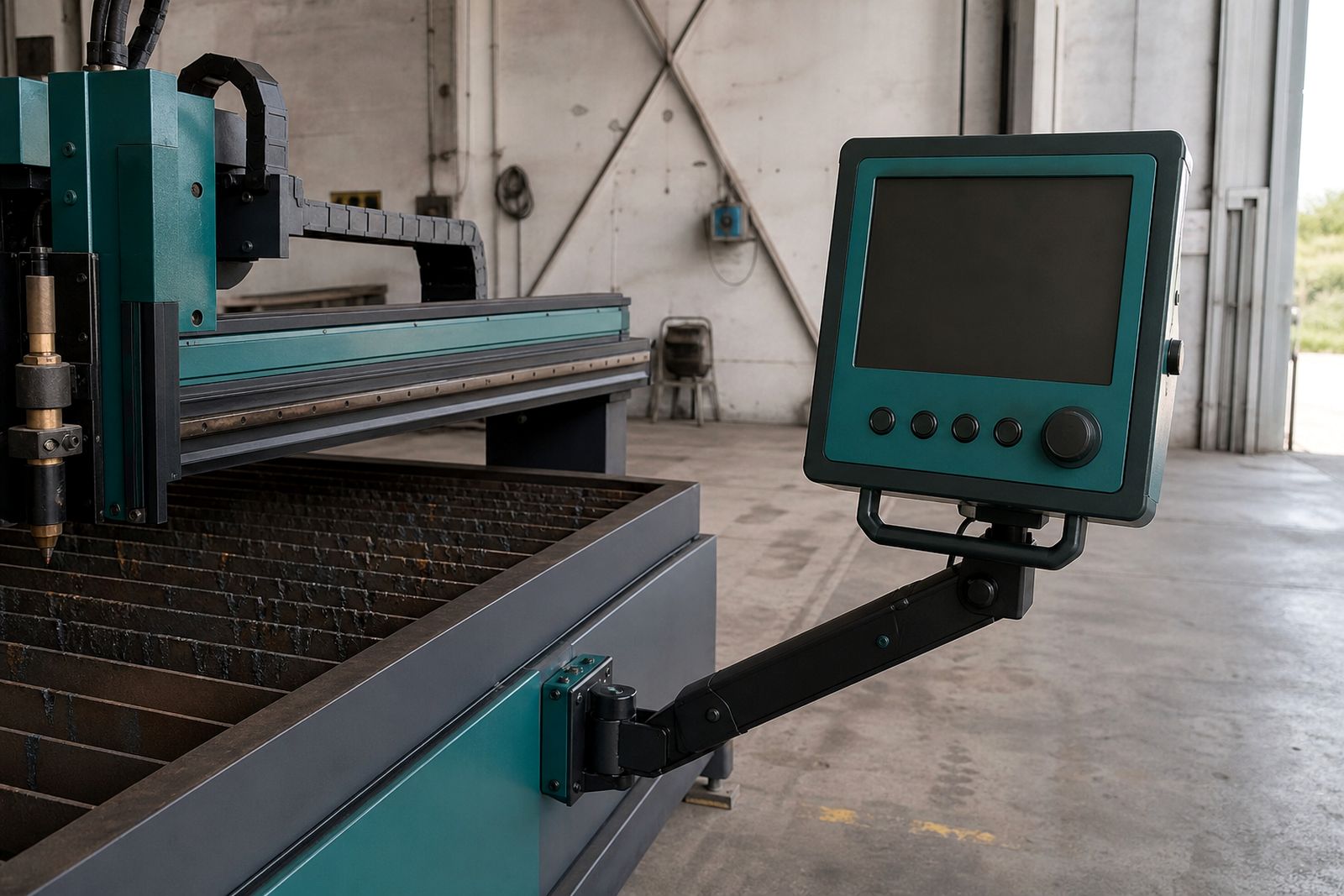
The controller is the table's operating brain. It reads the cut file, manages axis movement, handles pierce timing, calls height control when needed and keeps inputs and outputs in the right order so the torch does not fire at the wrong point. On an ageing machine the mechanics may still be usable, but the original control can become the weak point through poor file handling, unstable motion, awkward menus or limited spares.
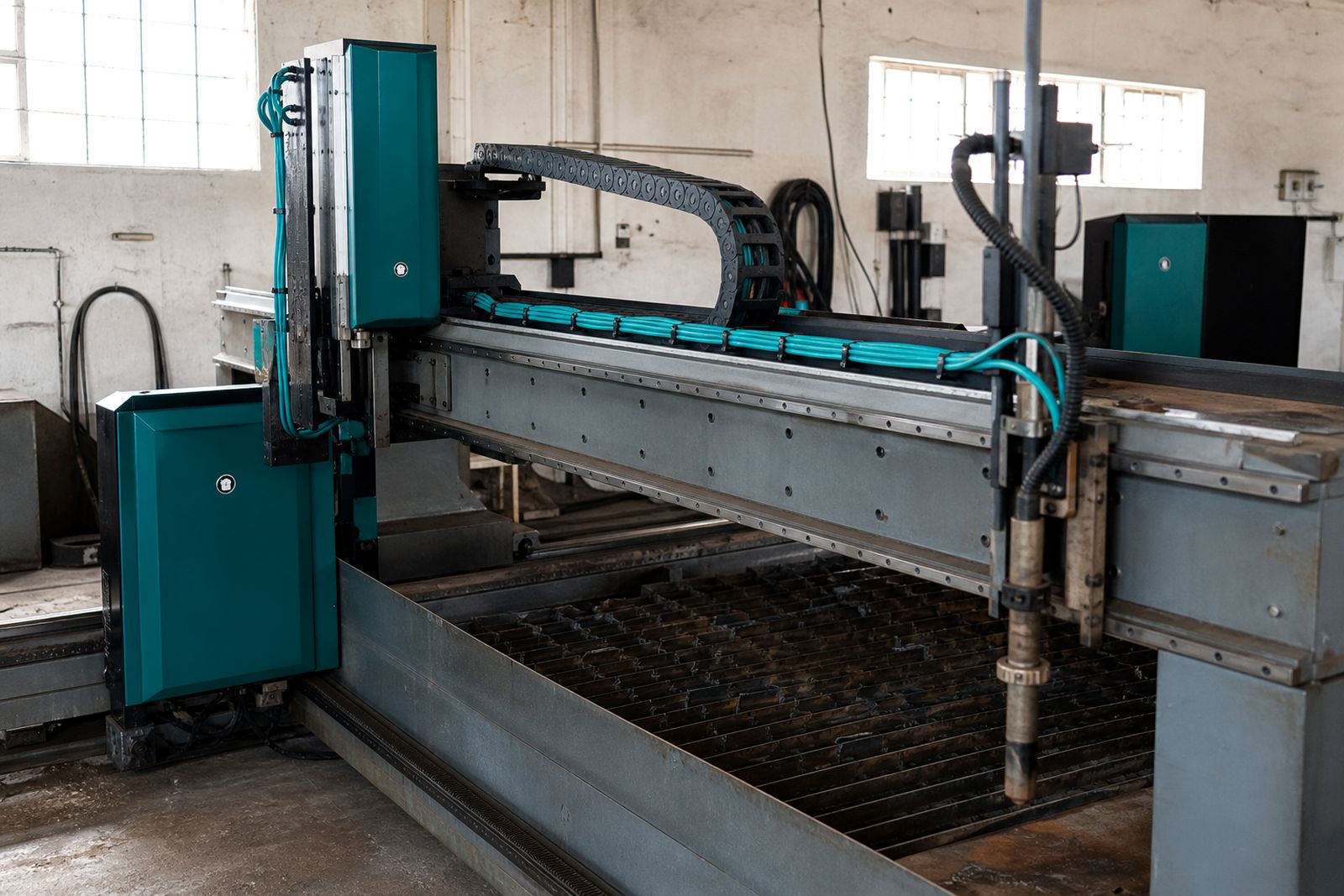
When we retrofit a controller we are not replacing the full table. We work with the existing gantry, rails, drives, motors and power source where they still make sense, then rebuild the control side around them. That usually means cleaner motion, steadier corners and fewer nuisance stops, provided the structure and drive train are still in serviceable condition.
- Standalone controllers suit sites that want a dedicated control unit on the machine.
- PC-based controllers suit shops that need broader software flexibility and easier file handling.
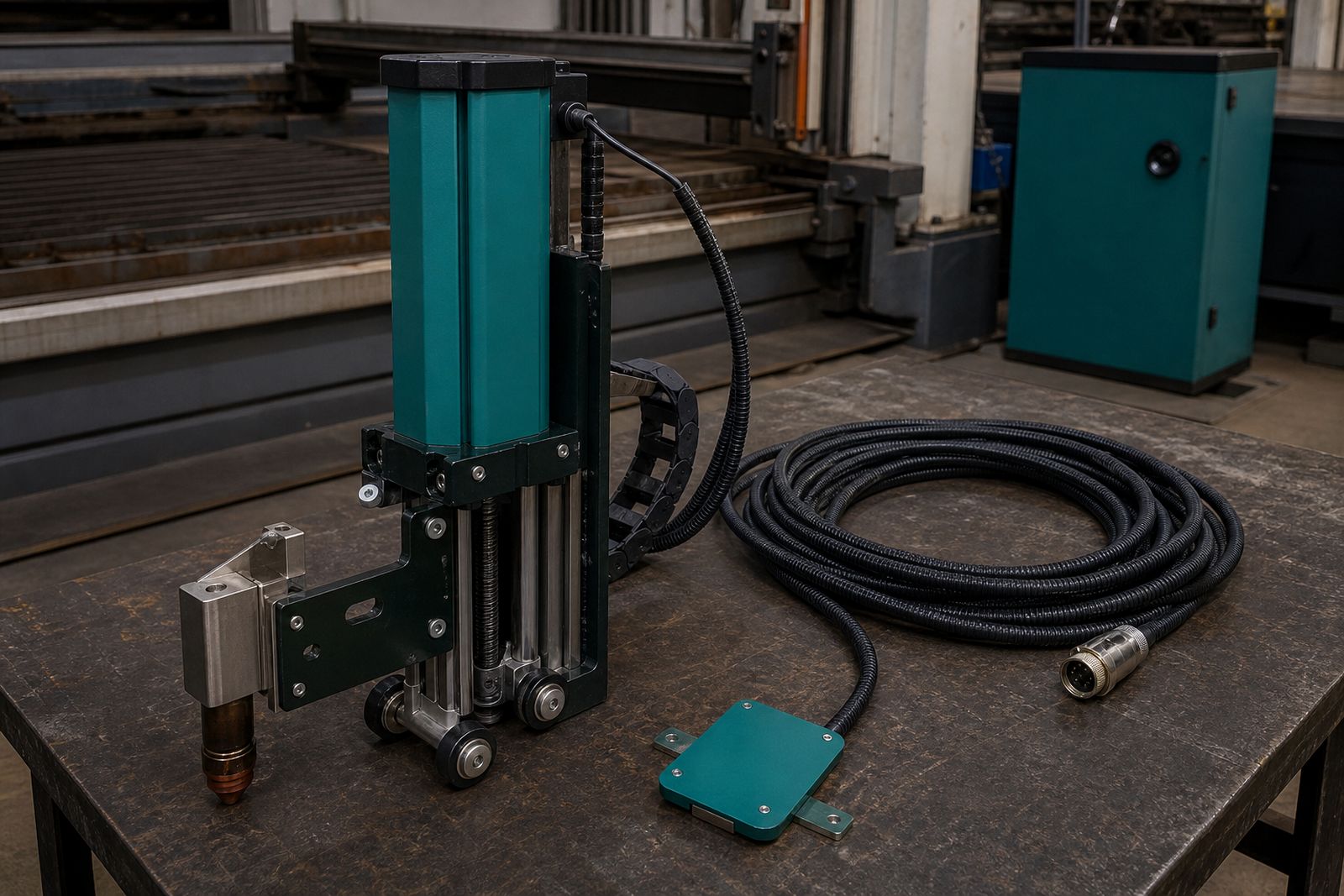
- Both types can be tied into torch-height control, limit switches, homing and safety circuits.
Standalone or PC-based: how we decide
There is no single controller that suits every plasma table. We look at the table size, the state of the drives, the number of axes in use, whether the machine runs one shift or long daily production, and how the operators prefer to load jobs. A small to mid-size gantry in a fabrication shop may be better served by a straightforward standalone controller, while a busier table with frequent program changes may benefit from a PC-based setup.
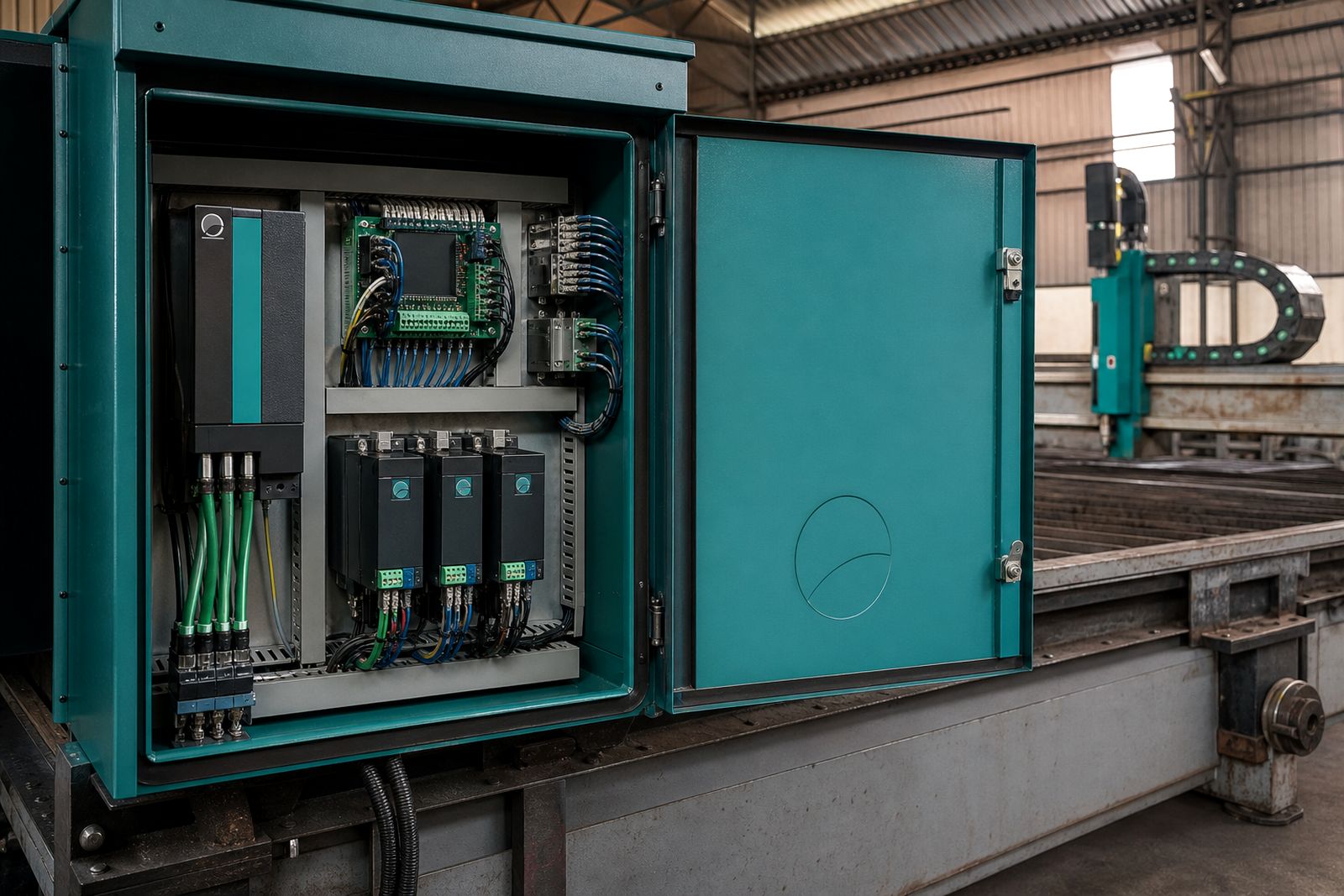
Standalone units are usually chosen where operators want direct on-machine control with fewer peripheral parts. PC-based systems are useful where nesting, frequent file edits and tighter workflow between office and shop floor matter more. In coastal workshops around Gqeberha and East London, cabinet sealing and ventilation matter just as much as the control choice because salt air can shorten the life of electronics if the panel is left dusty or damp.
- Choose standalone when simplicity on the machine matters most.
- Choose PC-based when file management and software integration matter more.
- Choose either only after drive compatibility, signal type and cabinet condition have been checked.
Working limits, axis counts and controller options
Most plasma retrofit work falls into two-axis X and Y cutting with a controlled Z axis for torch positioning and height control. Some tables also include an indexing axis, pipe attachment or extra digital outputs for extraction dampers and beacons. We match the controller to the real job rather than loading the cabinet with features nobody uses.
As a guide, we commonly fit controllers on gantry tables from about 1.5 x 3 metres up to 3 x 12 metres. Larger beds can also be handled, but cable routing, feedback quality and rack condition become more important as the travel increases. Controllers can manage step-and-direction drives or, where appropriate, servo systems, but the final choice depends on the health of the motion hardware already on the machine.
Controller-only retrofits suit tables with sound structure, accurate rails and a healthy electrical cabinet. If the frame is racked, the rails are badly worn, the carriage has excessive play or the electrical cabinet has heat damage throughout, a control swap alone will not sort out poor cut quality. In those cases we may point you to a wider gantry rebuild or structure and motion work first.
- Common axis setup: X, dual Y and Z.
- Typical table envelope: 1.5 x 3 m to 3 x 12 m.
- Control support: digital I/O, homing, limits, emergency stop and height-control interface.
What we need on site for installation
A controller retrofit is fitted and tuned on the existing table, so site conditions matter. We need safe access to the machine, a sound control cabinet or room to replace sections of it, stable mains power and a clear route for new signal and motor cables where required. If the old cabinet is packed with burnt wiring, mixed voltages and undocumented additions, part of the job may involve stripping that mess back before the new control goes in.
We also check earthing, isolation, cable segregation and the condition of the machine operator station. Plasma systems generate electrical noise, and poor routing can cause hard-to-trace faults, lost position and false triggers. In workshops with heavy grinding dust or sea air, cabinet filters and fan layout need proper attention or the retrofit won't stay clean for long.
- Mains supply must be stable enough for electronics and drives.
- The machine needs a safe emergency stop chain and usable limit switch positions.
- Space is needed for the controller, screen or operator panel, and related I/O.
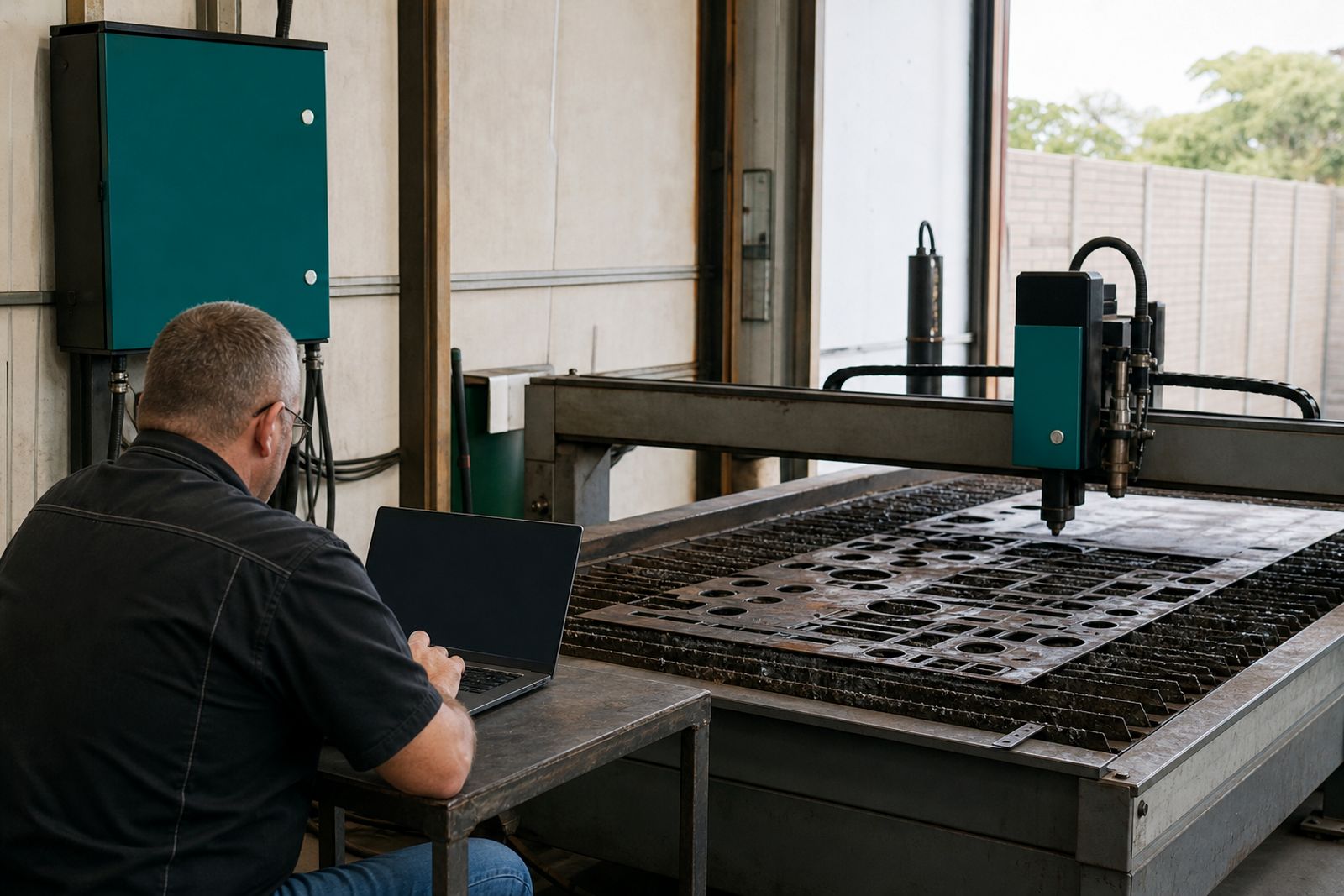
- Plan a file transfer method suited to the site. Cutting runs independently once files are on the machine.
Where these controllers suit production, and where they do not
A modern control retrofit suits fabrication shops, maintenance workshops and profile cutting operations where the table still has mechanical life left in it. It is a good route when the old controller has become unreliable, the operator interface wastes time or the machine can no longer handle current nesting and CAM output properly. Once tuned, a better controller usually improves cut path handling, restart control and general usability, which helps reduce scrap on repetitive work.
A controller retrofit suits tables with sound structure and serviceable motion hardware. We do not supply new complete plasma machines, new beds or used machines, and we do not push a controller onto a table that has reached the end of its structure. If a customer is trying to turn a very light, worn table into a heavy production cutter, the expectation is wrong from the start and we will say so plainly.
For power-source pairing and fume extraction, we look at those items as part of the whole table. Controller work is strongest when motion, arc control and smoke handling are all pulling in the same direction, not fighting one another.
Care, spares and what to send with your enquiry
Controllers last better when the cabinet stays sealed, filters are changed, fans are checked and operators do not use compressed air to blast conductive dust deeper into the electronics. Backups of machine parameters and cutting files should be kept off the machine as a normal workshop habit. A retrofit is easier to support if the panel is labelled properly and the machine wiring is left tidy, not patched over bit by bit.
When you send details through our contact form, give us enough to judge whether the table is a controller job or a broader rebuild. A few clear photos and the basic dimensions save a lot of site confusion later. If the machine is in Kariega, Makhanda, East London or farther out in the Western Cape, Free State or Gauteng, say so upfront because travel planning affects how the work is staged.
- Table cutting size in metres.
- Current controller type and whether it still powers up.
- Drive type if known: stepper or servo.
- Number of motors and axes on the machine.
- Whether height control is fitted now and if it works.
- Photos of the cabinet, gantry and operator station.
- Main material thickness range and typical plate size.
What our Plasma Retrofit customers say
Verified Google reviews
Questions we get asked
Can you fit a new controller to any plasma table?
Some tables are good candidates and some need broader mechanical work first. We first look at the frame, rails, drives, cabinet condition and safety circuit. Controller work on its own delivers proper results when the structure and motion side are still in serviceable condition.
Do you only install one type of controller?
We fit standalone and PC-based systems, chosen around the table, the operator workflow and the condition of the existing electrical setup. The right option depends on how the machine is actually used on the floor.
Will a controller retrofit include height control and software?
It can, if the table needs it. Many controller projects are paired with torch-height control, nesting or CAM software changes, power-source pairing and extraction updates so the full cutting process works as one system.
Also worth a look
Tell us about the job
Send sizes, materials and where you are through our contact form, and we will come back with the practical options.
Open the contact form