
Controller swap retrofit
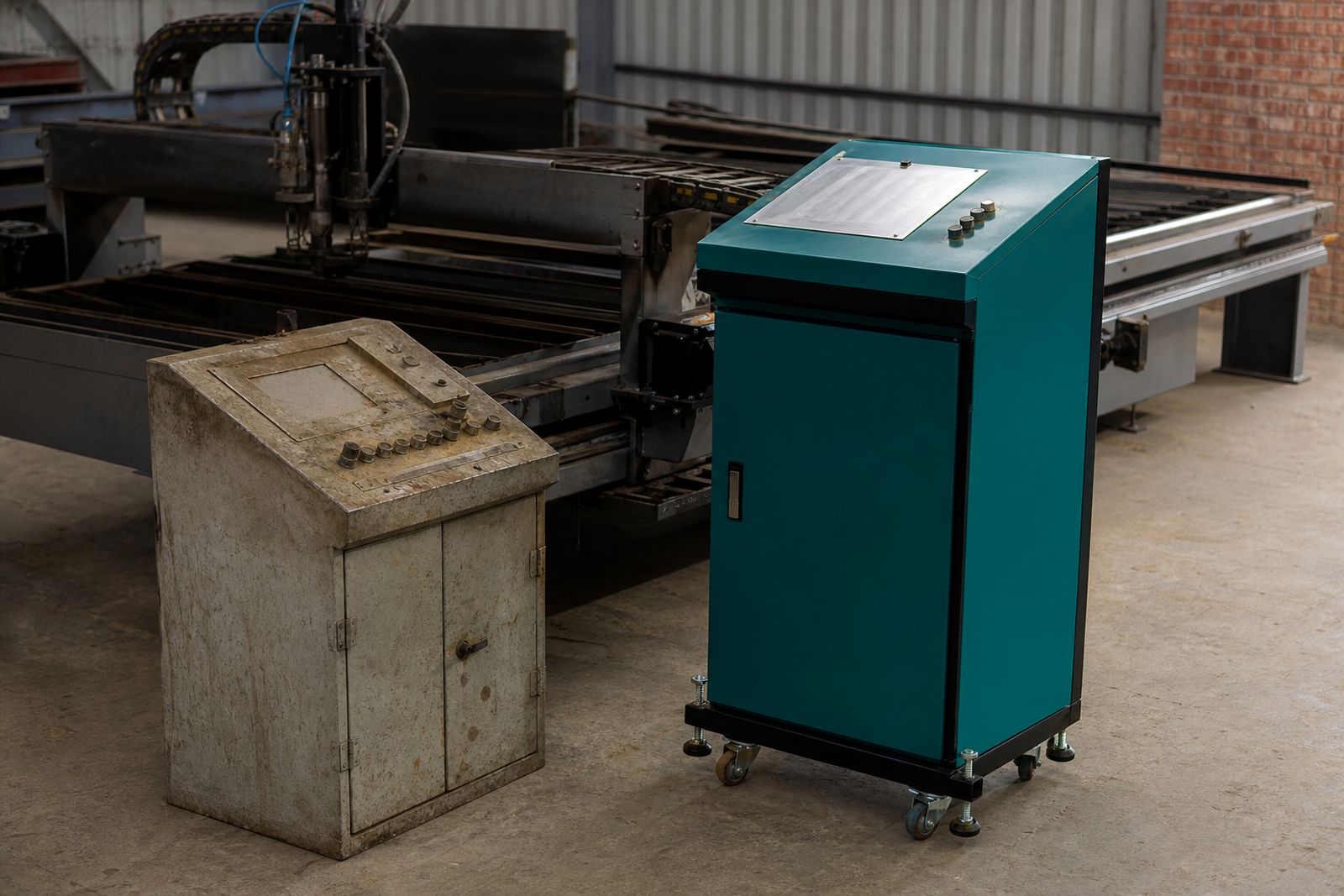
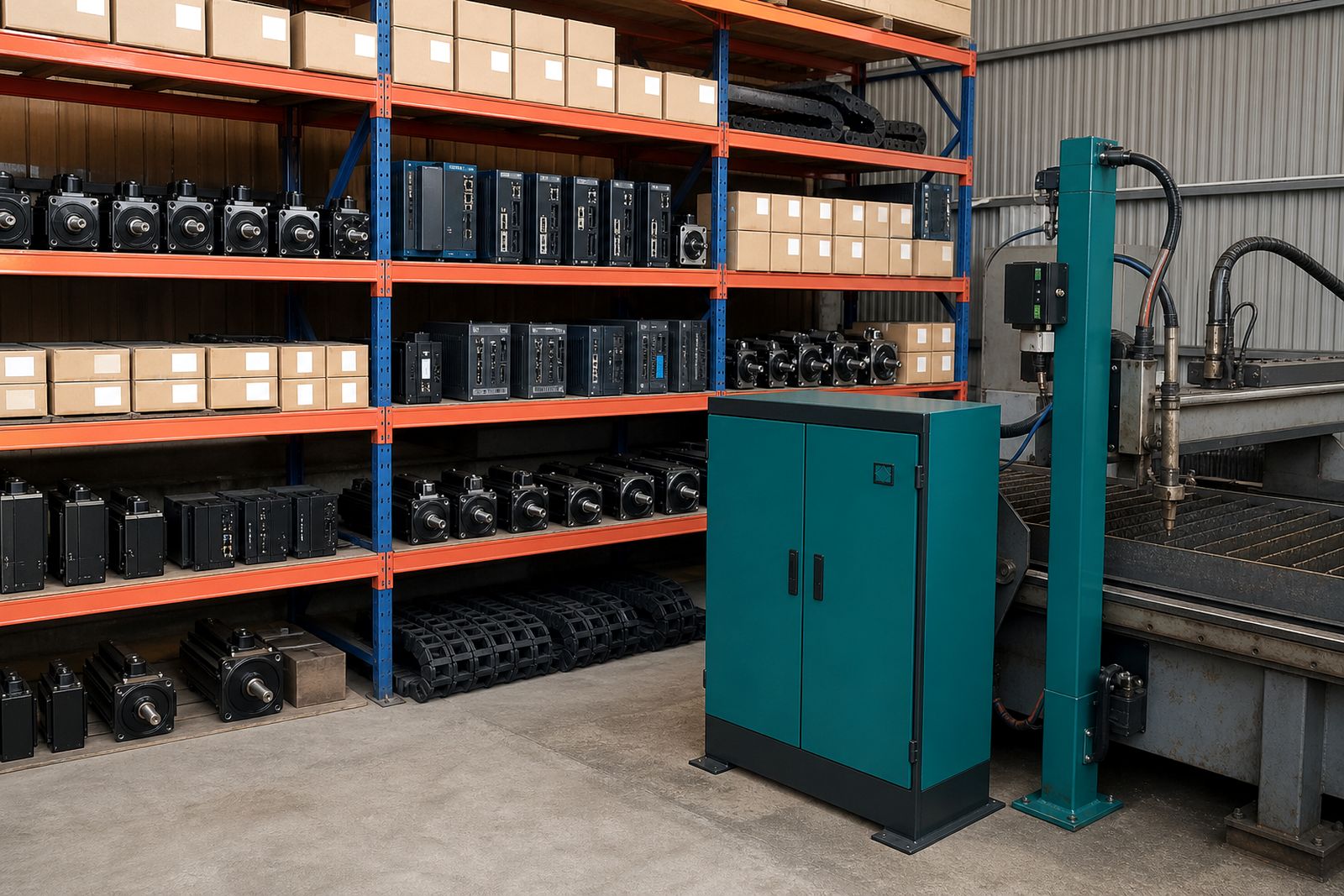
A controller swap takes an ageing plasma table out of guesswork and puts it onto current controls, drives and software. We remove the tired cabinet hardware, build a new teal cabinet, then wire, tune and test the table on site.
What the swap includes
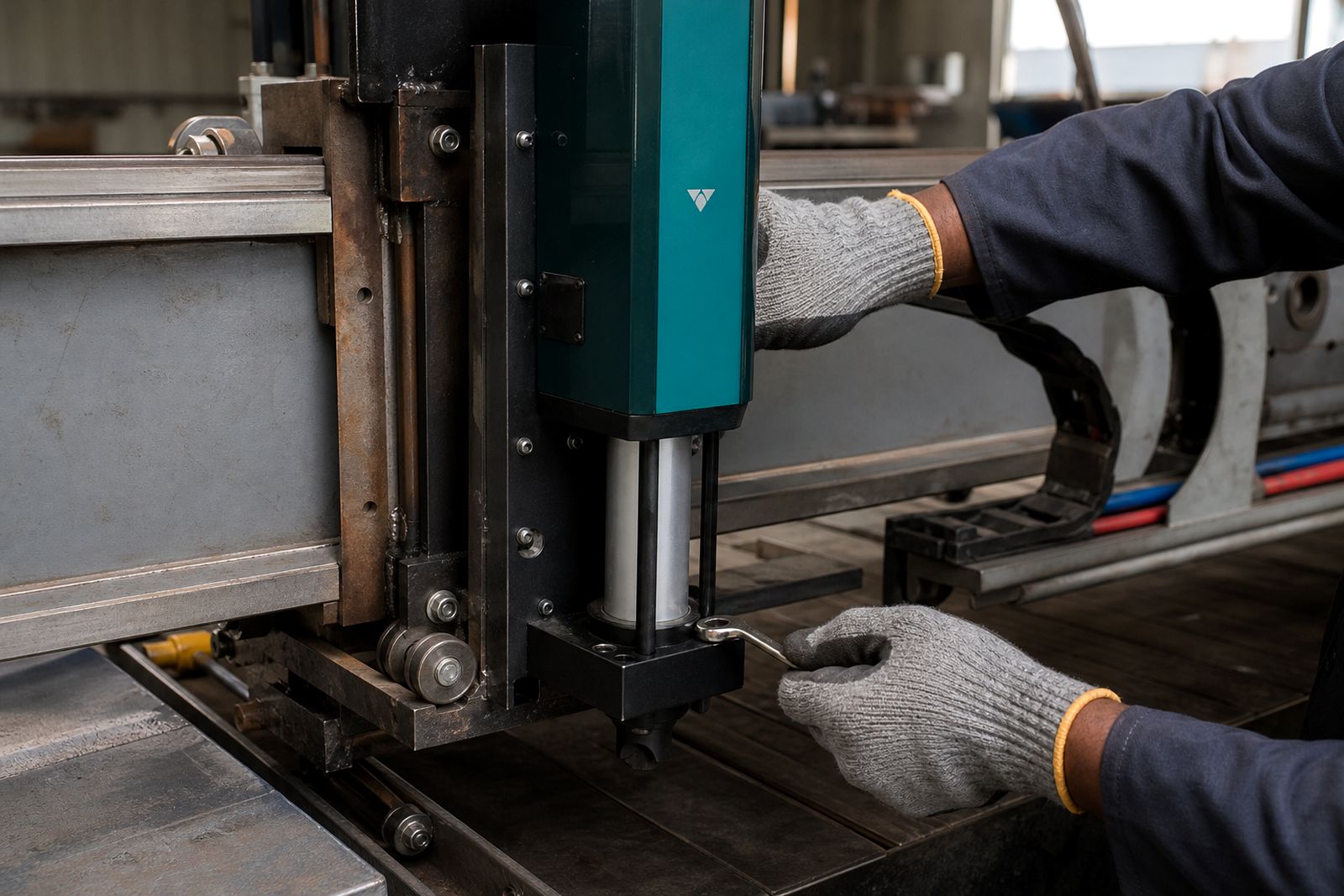
This service is for existing plasma tables that still have a workable gantry, rails and mechanics but have reached the end of the road with their old controller. We strip out the control side, replace drives and cabinet hardware, then commission the table with a current CNC control, torch-height control integration and a neater electrical layout. The aim is to make the table cut properly with stable motion and a control package that operators can live with every day.
- Removal of the old controller, drive hardware and failed or unsafe cabinet parts
- New control cabinet build in a teal enclosure with updated protection and labelling
- Replacement motion drives matched to the motors where practical, or motor changes where needed
- Home and limit switch integration, E-stop circuit checks and interlock verification
- CNC control setup, torch-height control setup and handover on the client site
- Basic cut testing, acceleration tuning and pierce-to-cut transfer checks
Where the table also needs nesting, CAM or power-source pairing, we fold that into the retrofit plan as a separate line item. We do not supply new complete tables, new beds or used machines.
What we inspect before we strip the cabinet
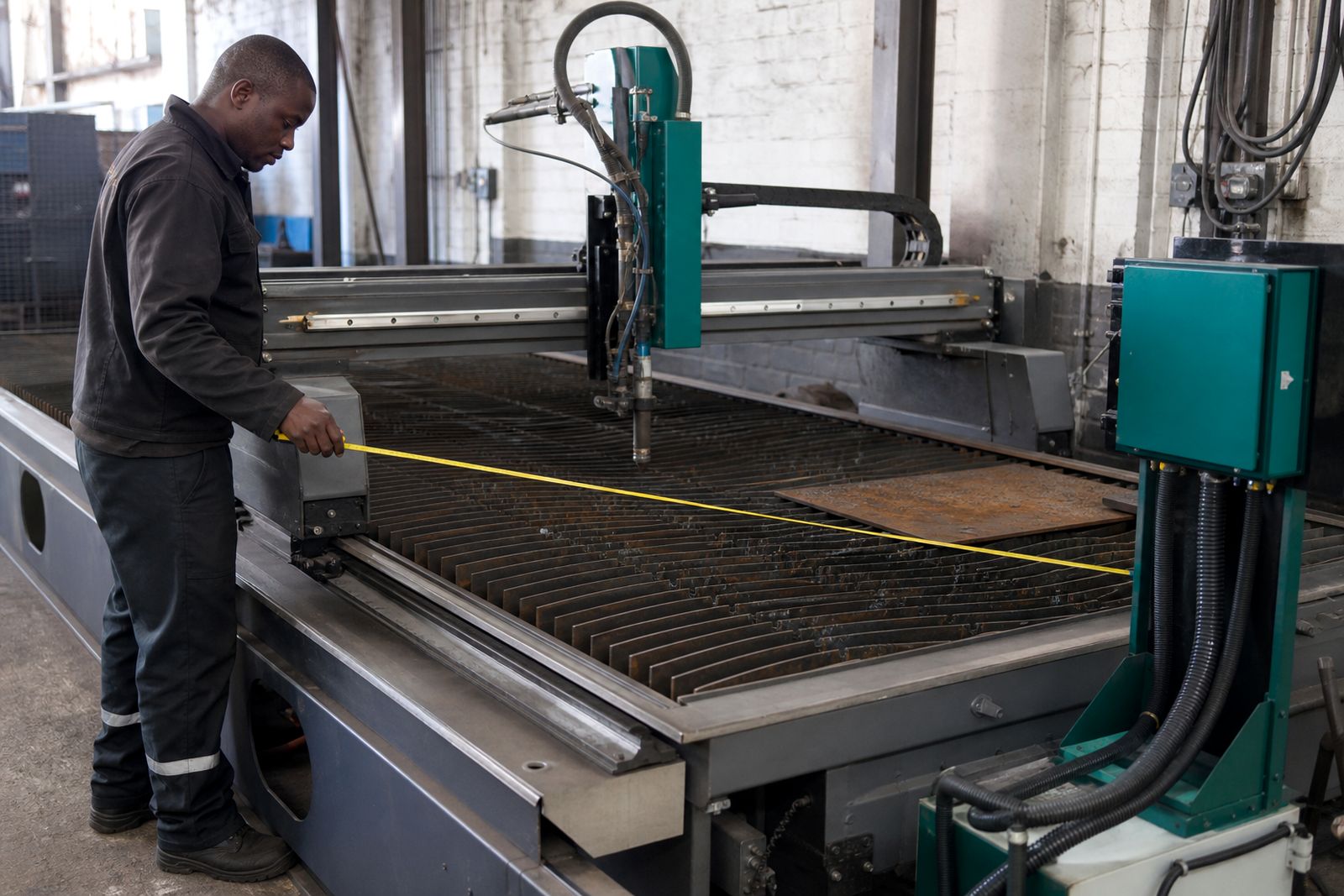
A controller change only works if the mechanical side can hold tolerance. Before any parts are removed we inspect the gantry travel, rack or leadscrew condition, carriage play, cable path, switch gear and the state of the incoming supply. We also check whether the present motors are worth keeping. Plenty of older tables in Gqeberha and along the coast suffer from cabinet corrosion, brittle insulation and earthing that was acceptable years ago but causes noise problems now.
If the rails are badly worn, the bridge is twisting, or the slat bed has sagged enough to upset height readings, we will say so plainly. In those cases a controller swap may still happen, but it must be priced with the real condition of the table in mind. A neat screen and fresh cabinet cannot fix backlash, bent structure or cracked drag-chain mounts.
- Mechanical free play on X and Y axes
- Z-slide condition and floating head operation where fitted
- Motor nameplate details, encoder feedback if present and cable condition
- Cabinet space, cooling path and contamination from dust or salt air
- Plasma interface signals, arc transfer and divided-voltage availability
The retrofit sequence on site
Once the scope is agreed, the job follows a set order so the table is not left half-defined. First we document the existing wiring and I/O points. Then the old cabinet hardware comes out. The new enclosure is mounted, and field wiring is brought across or renewed where that makes more sense. After that we load motion parameters, assign inputs and outputs, and check every safety function before live motion starts.
Motion tuning is done axis by axis. We set direction, home logic, soft limits, acceleration and top speed to suit the mass of the gantry and the condition of the drive train. Once the movement is stable, we bring in torch-height control and plasma signalling. Test plates are then cut to verify corner behaviour, height correction and restart behaviour after pauses. There is a bit of stop-start in this stage because one adjustment often shows up another, but that is where a retrofit earns its keep.
- Site isolation and lock-out before cabinet work begins
- Removal of redundant hardware and damaged terminal gear
- Installation of the new controller, drives and protected power distribution
- I/O mapping for motors, switches, torch trigger and safety chain
- Travel calibration, square-up checks and torch-height tuning
- Cut trials on client material where available
What your workshop must prepare
The best retrofit visits happen where the table can be reached properly and the surrounding area has been cleared. We need safe access to the machine sides, the cabinet position and the plasma power source. If extraction ducting is being changed at the same time, there must also be room for that work to happen without climbing over stock sheets and scrap bins. For inland and coastal sites alike, a dry area for electronics matters more than most workshops expect.
Please have one operator or maintenance lead available who knows the table history, especially recurring faults, switch failures and any axis that has been losing steps or drifting off square. A few sample drawing files and the material thicknesses you cut most often help us tune the machine to real work.
- Clear access around the table and cabinet
- Stable mains supply and the isolator location identified
- Compressed air, extraction and plasma source available for test cuts where fitted
- Sample plate in common thicknesses, usually mild steel and any routine production material
- A list of known faults and any previous electrical changes
How pricing is worked out
Controller swap pricing follows the actual table in front of us and the work required on that machine. The largest drivers are axis count, motor condition, whether existing motors can stay, cabinet size, amount of field rewiring, the state of the safety chain and whether the plasma source already provides clean interface signals. Travel to Kariega, East London, Makhanda and farther runs is priced according to distance and time on site.
Some tables need little more than a clean control change and tuning. Others need new motor cables, switch replacement, fresh drag-chain sections or cabinet relocation because heat and dust have cooked the old position. Software, height control, extraction interlocks and power-source pairing are usually shown separately so the scope stays clear. Structural rebuilds are handled under our gantry and structure work.
Aftercare and support on the table
Once the table is cutting properly we leave the machine with labelled wiring, backed-up control settings and a practical handover for the operator. That covers homing, torch-height basics, fault checks and the few settings that should only be changed with care. We prefer the client to know what each alarm means rather than standing in front of a silent screen after a trip on the safety circuit.
We also keep a record of the cabinet layout and core settings for future service visits. For coastal workshops this matters because salt air slowly works its way into connectors and fan paths, and routine cabinet cleaning becomes part of keeping the table steady. If spares are sensible to keep on the shelf, such as switches or consumable electrical items, we will point that out during handover.
What our Plasma Retrofit customers say
Verified Google reviews
Questions we get asked
Can you keep our existing motors?
Often yes, provided the motors test well and match the new drive plan. If feedback devices, insulation or torque margin are poor, we will recommend replacement instead of forcing old parts into a new cabinet.
Will a controller swap fix poor cut quality on its own?
It improves motion control, arc signalling and height behaviour, but worn rails, loose gearboxes, bent structure or unstable power at the plasma source can still spoil the cut.
Do you do the work only in Gqeberha?
Our base is in Gqeberha, with regular work across the Eastern Cape and retrofit travel into the Western Cape, Free State and Gauteng. Site conditions and travel distance form part of the quotation.
Also worth a look
Tell us about the job
Send sizes, materials and where you are through our contact form, and we will come back with the practical options.
Open the contact form