
Height-control upgrade
Many older plasma tables still cut with fixed torch height or manual setting, which shows up quickly on warped plate and long nests. We fit arc-voltage height control to existing tables, then tune the system on site so cut height tracks properly through pierce, motion and corners.
Where this upgrade makes a difference
A table without active torch-height control can still cut, but it usually gives away quality on sheet that is not perfectly flat. The torch rides too high in one area, too low in the next, and consumables take the knock. On thin material that often means dross and unstable kerf, while thicker plate can show edge bevel, misfires after piercing, or tip contact on lifted sections.
This retrofit suits older gantry tables where the motion system is still worth keeping but the cut process needs better control. We add arc-voltage height control so the Z axis follows actual cut conditions rather than a fixed number entered at the start. In coastal workshops around Gqeberha and East London, that extra control also helps when plate arrives with rust bloom, mill scale or slight bowing from storage near humid air.
- Useful on tables cutting mild steel, stainless and aluminium
- Best value where the frame and rails are serviceable
- Particularly helpful on nested sheets with mixed part sizes
- Suitable for retrofit during a wider controller swap or as a stand-alone upgrade
What is included in the height-control package
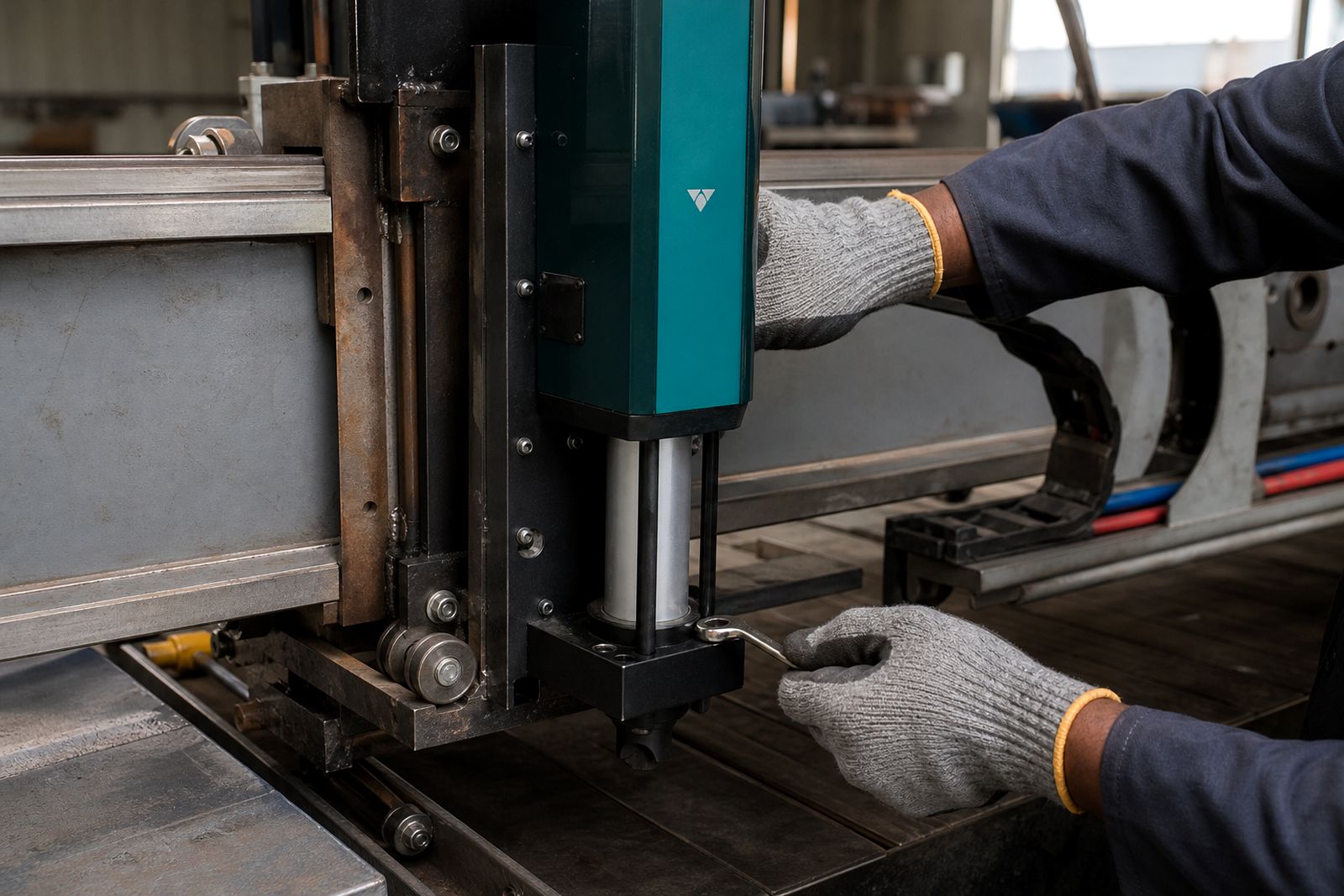
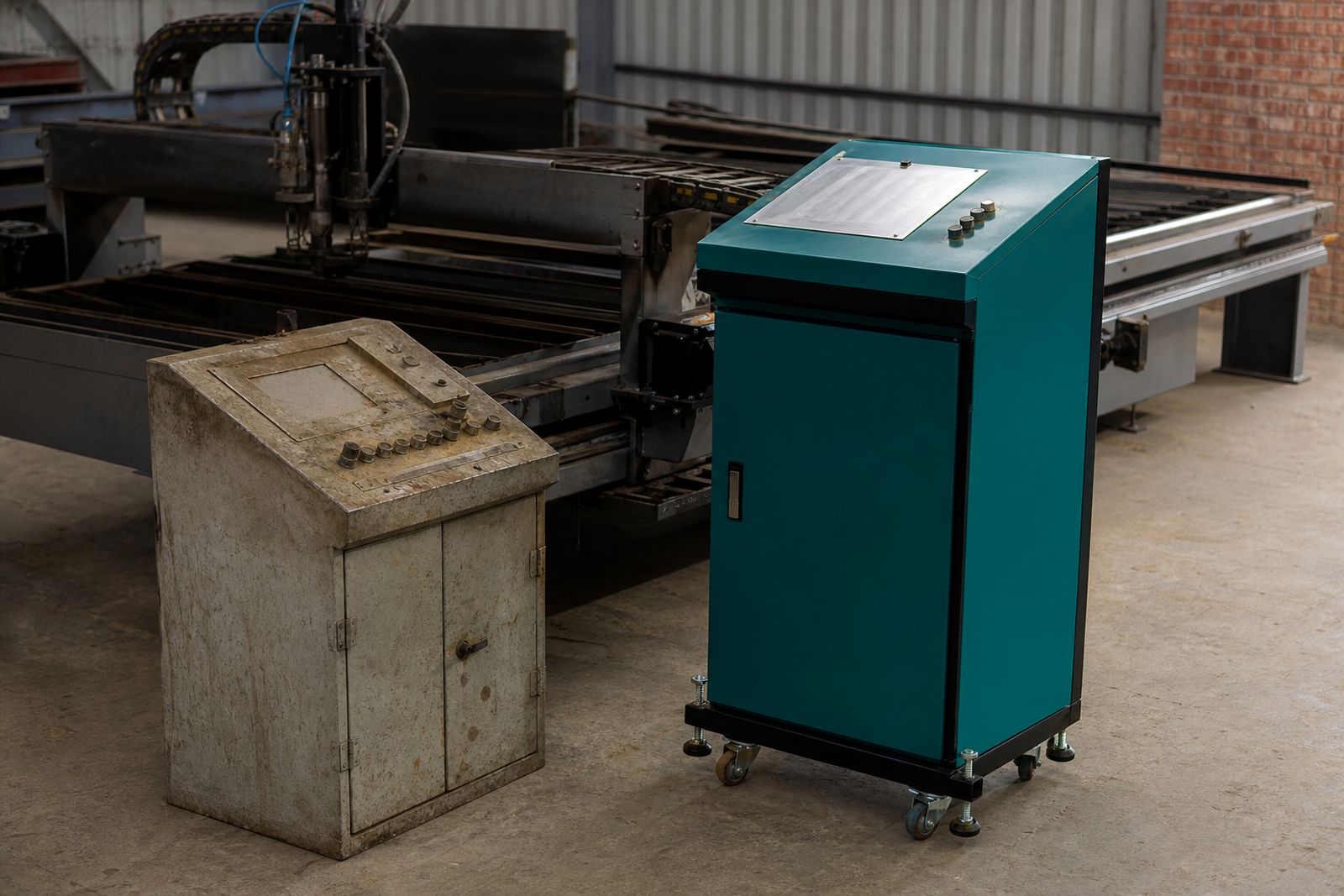
The upgrade starts with matching the height-control unit to the existing controller, drives, Z axis and plasma power source. We check available signals, torch-on feedback, arc-ok status, voltage sampling method and the present IHS routine if one is already in place. From there we fit the required hardware, wire the control cabinet, set the operating parameters and test the table under live cutting conditions.
Most jobs include cabinet work, field wiring, software setup and cut trials on your material. Where the existing Z slide has excessive backlash, poor switch repeatability or rough travel, we flag that before fitting the control loop. A height-control unit cannot hide worn mechanics, and that catches some shops out.
- Arc-voltage height-control unit and interface wiring
- Signal integration with the CNC controller and plasma source
- Pierce height, cut height and anti-dive parameter setup
- Initial height sensing check and Z axis calibration
- On-site test cuts and operator handover
How the retrofit is done on site
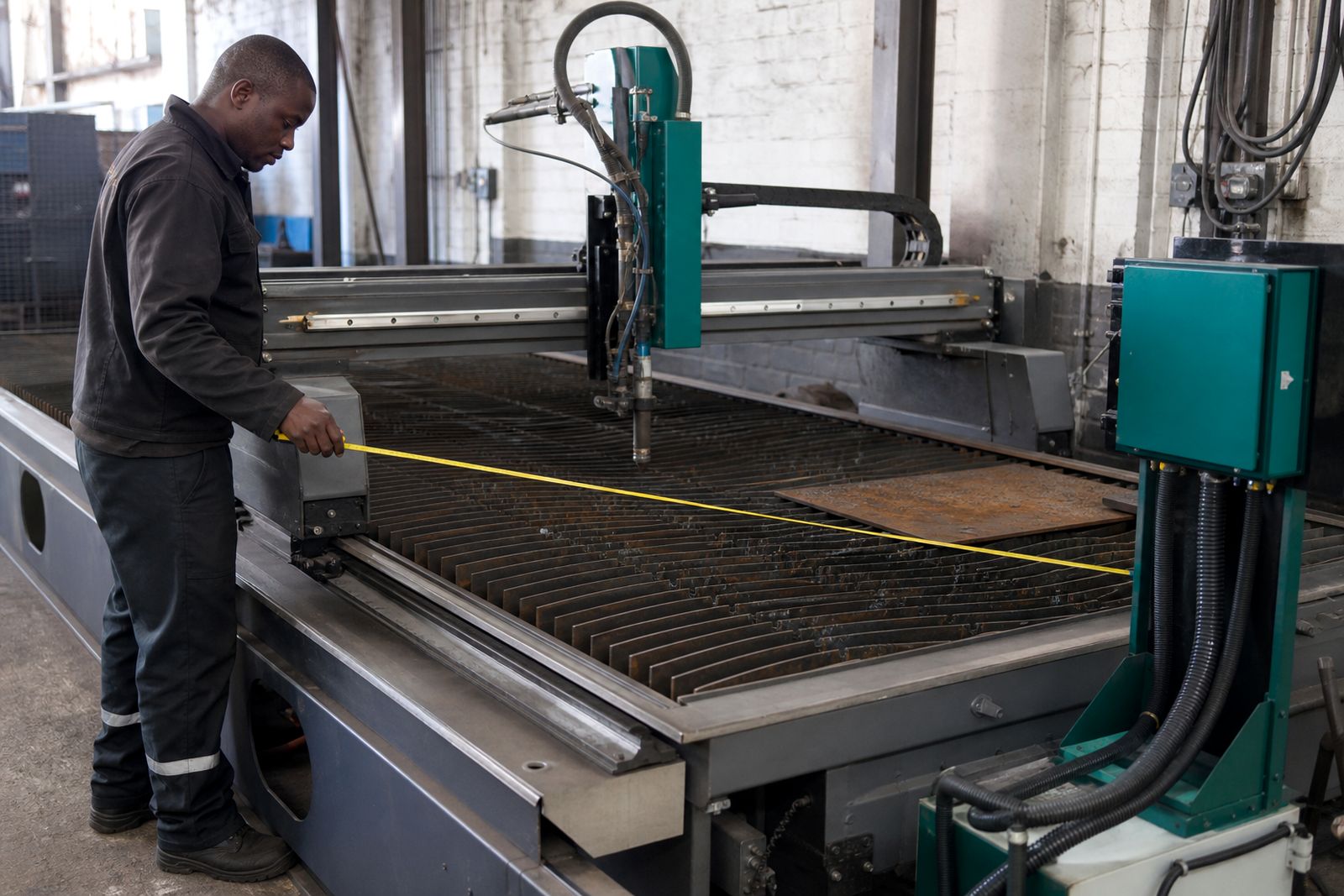
We begin with a table inspection and a short review of the current cut process. That includes plate sizes normally run, material thickness range, nozzle and tip sizes, present cut speed, and whether the machine already has a usable Z home routine. If the table has electrical noise issues, poor earthing or a cabinet that has seen years of dust and coastal moisture, those conditions are noted first because they affect voltage reading accuracy.
Once the checks are done we mount the height-control hardware, connect the input and output signals, and route wiring away from torch leads and noisy mains lines. After that the control values are entered and the Z travel is tested through home, touch-off and retract moves. We then cut sample parts, adjust sampling delay after pierce, set anti-dive behaviour in corners and slow sections, and verify stable voltage tracking on straight runs. Final tuning is done with your actual plate if possible, not a random offcut.
- Inspect table condition, earthing and signal availability
- Fit hardware and complete cabinet integration
- Calibrate Z motion and sensing sequence
- Run live cuts and tune voltage tracking
- Hand over settings with practical operator notes
What your workshop should have ready
Good preparation saves time on site and gives cleaner commissioning. The table should be accessible on all sides needed for cabinet work and Z axis checks. Please have a working air supply, the plasma source you want paired to the table, and a stack of material representative of normal production. If the machine has recurring faults, examples help, especially tip crashes, random dives or inconsistent pierce height.
It also helps if the operator can show one or two regular jobs that have been troublesome. We are not bringing a new complete machine or replacement bed, so the existing table must be structurally safe to work on and capable of moving under its own power before tuning starts.
- Three-phase power available to the table and source where applicable
- Usual plate thicknesses on hand for testing
- Access to the control cabinet and gantry sides
- Current consumables fitted and spares nearby
- Any old drawings, manuals or wiring notes if you have them
How pricing is worked out
Cost depends less on table size alone and more on how much integration work is required. A straightforward upgrade on a tidy cabinet with a healthy Z axis is one thing. A machine with damaged wiring, missing feedback signals, unstable torch firing or a seized slide is a different job, and that can only be priced properly after checking the actual condition.
We look at the control platform already fitted, the plasma source interface available, the amount of cabinet rework needed, travel to site, and whether the table needs extra items such as a new sensing arrangement, relay isolation, or Z-axis repair work before height control can hold a setting. Workshops in Kariega, Makhanda and East London are common field jobs, and travelling crews also work farther afield where retrofit work justifies the visit. For a quotation, send the table details through our contact form with a few photos of the gantry, Z axis and control cabinet.
Aftercare and operating notes
Once the machine is cutting properly we leave the key settings recorded for the operator and maintenance team. Height control needs periodic checking and adjustment. Consumable wear, poor air quality, loose earth return, and changes to cut speed all influence how well arc voltage tracks the true torch position. If a shop changes plate range often, a short review after the first production runs can be worthwhile.
We also support related retrofit work such as a controller swap, power-source pairing or extraction changes around the cut area. If the cabinet lives in salty air near the coast, sealed entries and routine cleaning matter more than people think. It is one of the first places drift starts.
What our Plasma Retrofit customers say
Verified Google reviews
Questions we get asked
Can height control be added if the table cuts manually at a fixed height?
Usually yes, provided the Z axis, sensing method and controller signals can be integrated properly. We first check whether the mechanics and electrical side are suitable for stable voltage tracking.
Will this fix poor cut quality on its own?
It improves height stability, which often reduces dross, tip contact and uneven edge quality, but it does not correct worn rails, backlash, bad air supply or incorrect consumable selection.
Do you supply a new table with the upgrade?
This service is for existing plasma tables only. We retrofit controls and related equipment onto tables that are already in the workshop.
Also worth a look
Tell us about the job
Send sizes, materials and where you are through our contact form, and we will come back with the practical options.
Open the contact form